
East Greenland
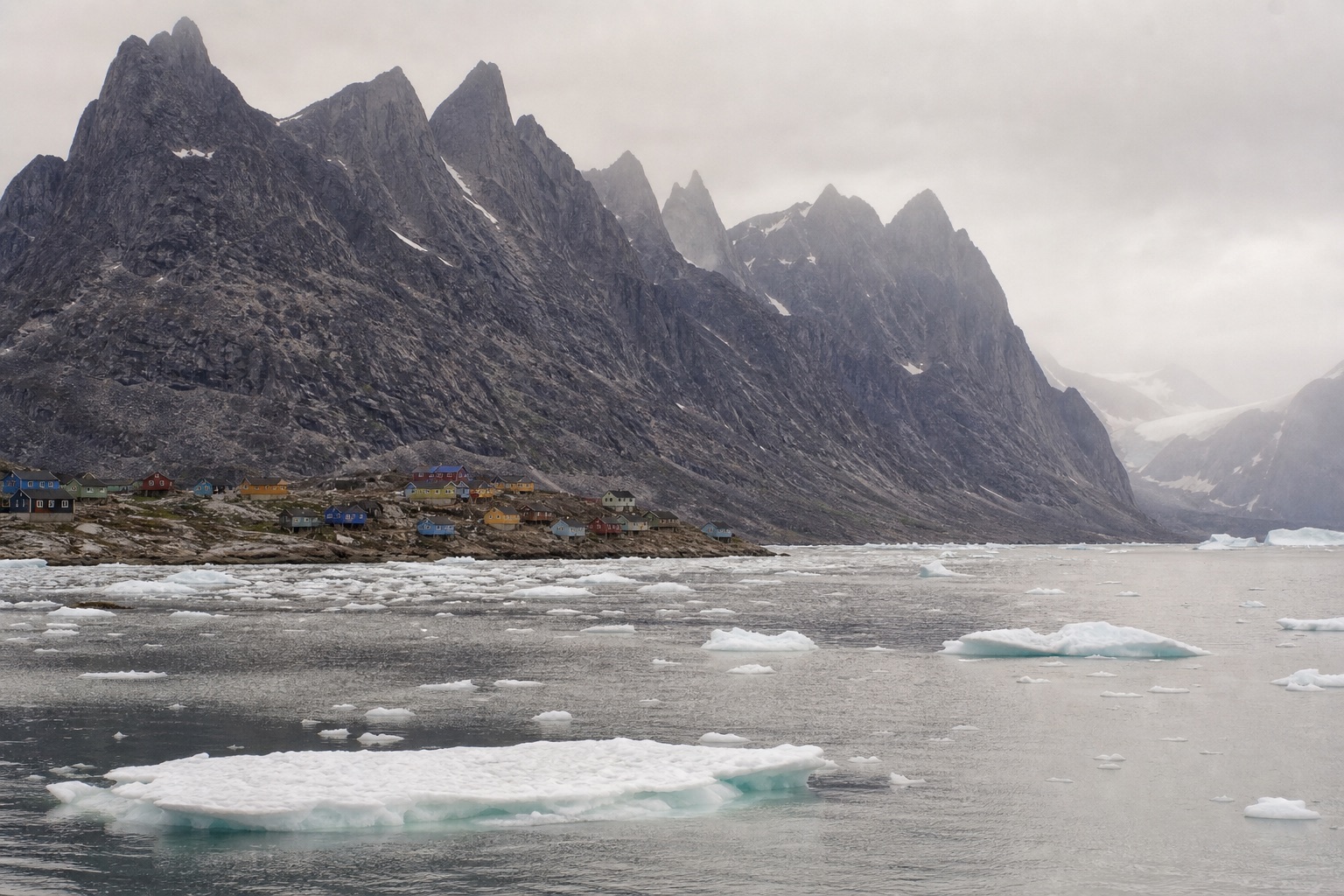
East Greenland is Greenland’s east-coast region, including the town of Tasiilaq and the settlement of Kulusuk, among fjords and mountains. We recommend it for a longer stay planned around hiking, boat tours, dog sledding or the northern lights, depending on the season.
Understanding East Greenland
East Greenland refers to a region rather than a single destination. It includes the town of Tasiilaq, the settlement of Kulusuk and other parts of Greenland’s east coast. When we plan a trip here, we begin with the intended base, the time of year and the activities that matter most.
That distinction is practical. A stay in Kulusuk is not automatically the same as a stay in Tasiilaq or elsewhere along the coast. Transport, accommodation and activities need to work together for each location. We recommend choosing a base first, then building the itinerary around it rather than adding several places before confirming the connections between them.
The region has an Arctic coastline of fjords, mountains and open sea. Weather affects flights and outdoor activities, so the daily schedule needs room for changes. This is not specific to one operator or one part of East Greenland. It is a normal condition of travelling in Greenland.
Tasiilaq and Kulusuk can both be part of the same East Greenland trip, but they should not be treated as interchangeable names. Check where the accommodation is, where each activity begins and how every stage of the journey has been arranged. This gives a more realistic picture of travelling time and whether additional days are needed.
Getting to East Greenland
Air Greenland flies between Nuuk and Kulusuk. This is the confirmed domestic route to use as the starting point when planning an East Greenland trip through Nuuk. Check the timetable for the actual travel dates, since the existence of a route does not mean that every connection works on the same day.
Nuuk’s international airport opened on 28 November 2024, with direct jet services to and from Copenhagen. There are five flights a week, rising to six over Christmas and New Year and eight during summer. Travellers can therefore plan a journey from Copenhagen through Nuuk and onwards to Kulusuk, but the complete itinerary still needs to be checked as a single chain of flights.
If travelling to Greenland from somewhere other than Copenhagen, the journey to Copenhagen or Nuuk also needs to be coordinated with the domestic connection. We recommend allowing adequate time between separate flight sectors. Arctic weather can affect air traffic, and a tight itinerary leaves few options if the schedule changes. An additional overnight stay on the way or a buffer day before the return journey may be useful, particularly when several flights and date-specific activities are involved.
If Tasiilaq is part of the itinerary, investigate the onward transport from Kulusuk separately. Do not reserve accommodation and activities in different parts of the region until the full transport chain has been confirmed. The same applies on the return journey: there should be a clear plan for getting back to Kulusuk and continuing to Nuuk.
Before departure, confirm tickets, baggage rules and any check-in requirements directly with the airline. Timetable changes should be checked in the same way. General route frequencies help with initial planning, but the services operating on the specific dates determine how many overnight stays are actually required.
Things to do in East Greenland
Activities in East Greenland depend on the season and local conditions. There is no single programme that works throughout the year, so we normally leave some time uncommitted. Hiking, boat tours, dog sledding and northern lights viewing are the main activities to consider, but they belong to different seasons.
Hiking
Hiking is primarily an option during the milder months. Select the route according to the surface, weather and participants’ experience rather than distance alone. A short walk can still require sturdy footwear and spare clothing if the wind increases.
First-time visitors should ask locally about current conditions. A guided trip is the more appropriate choice when the route or weather is uncertain. It is also sensible not to place an important flight immediately after an outdoor plan that may have to be moved.
Boat tours
Boat tours provide a way to see the coast and fjords from the water when local departures are available and conditions permit sailing. The price of a tour in East Greenland depends on duration, type of boat, route and number of participants; our article about prices in Greenland covers the observed price levels with source and date.
Before booking, check what is included, what clothing is recommended and whether the departure can be moved if the weather is unsuitable. It can feel colder on the water than it does in town, particularly in wind. We normally carry an additional insulating layer even when conditions appear calm at departure.
Dog sledding
Dog sledding is legally permitted in East Greenland. The dog line is a boundary at the Arctic Circle within West Greenland; it does not define East Greenland as simply being east of a line. The permitted districts are West Greenland north of the Arctic Circle and East Greenland as a separate exception. Dog sledding does not exist in Nuuk, Qaqortoq or anywhere in South Greenland.
The general dog-sledding season in East Greenland runs from January to April. That does not mean every trip can operate on every date during this period. Snow, ice and weather conditions still determine whether a departure is possible. Plan dog sledding as a winter or spring activity, not as something to do in summer.
Warm clothing is particularly important because passengers may remain seated for extended periods. This feels different from walking in the same temperature. We recommend several insulating layers, windproof outerwear, warm boots and additional protection for the hands and face. Ask in advance whether specialist outer clothing or other equipment is provided.
Northern lights
Northern lights can be visible from September to April. Darkness and suitable weather are both required, so no particular evening can be guaranteed. If seeing the northern lights is an important part of the trip, several nights in one place are more useful than a single attempt.
A separate organised programme is not necessarily required every evening. The main requirement is enough time and flexibility to respond when conditions are suitable. Keeping an evening free can be more practical than committing every night to a fixed activity.
Time in town and flexible days
Not every day needs a booked activity. Time in the town can serve as a reserve if a flight or excursion is moved, while also making the overall schedule easier to adapt to the weather. In East Greenland, flexibility is generally more useful than a full programme with fixed start times from morning to evening.
We suggest identifying one or two priority activities and leaving space around them. This is particularly important when an activity depends on snow, ice, wind or conditions on the water. A quieter day is not wasted if it prevents one change from disrupting the rest of the trip.
Best time to visit East Greenland
Choose the month according to the activity that matters most. Dog sledding runs from January to April, while northern lights can be visible from September to April. March and April therefore allow a trip to be planned around both, although local conditions during the stay still determine what can go ahead.
January and February are winter months with low temperatures and limited daylight. They suit travellers who specifically want a winter stay and accept that outdoor plans require more clothing and greater flexibility. March and April have more daylight while remaining within the general dog-sledding season.
From June to August, the emphasis shifts towards hiking, boat travel and time outdoors. Summer is milder than winter, but East Greenland’s Arctic location means warm and windproof clothing still belongs in the luggage. Do not pack as though for an ordinary northern European summer and assume that one light outer layer will be sufficient every day.
September and October can work for travellers who want to combine outdoor activities with the possibility of northern lights. The days become shorter, and the weather can change from one day to the next. Later in winter, cold and darkness take up more of the stay, while activities increasingly depend on winter conditions.
There is no single month that suits every itinerary. We recommend summer for travellers mainly interested in hiking and boat tours, and January to April for those prioritising dog sledding. For northern lights, travel between September and April and, where possible, spend several nights in the same place.
The seasons should not be treated as interchangeable. A summer itinerary centred on boats and hiking cannot simply be moved to winter without changing its activities, clothing and timing. Start with the season, then arrange the transport and accommodation around the resulting plan.
Where to stay
Choose accommodation according to its location and its role in the itinerary rather than category alone. Depending on availability for the selected dates, options may include hotels, guesthouses or simpler accommodation. Before confirming a reservation, check the room type, whether the bathroom and toilet are private or shared, which meals are available, and the terms for changes and cancellation.
Location matters when there are early departures or activities with a fixed meeting point. Ask how to travel between the accommodation and each planned activity, and whether any necessary transport is included. It is better to establish this in advance than to assume that all places in the area are close together.
If the itinerary includes both Kulusuk and Tasiilaq, divide the overnight stays only after transport between them has been confirmed. Avoid placing an important international connection directly after a local transport sector without a time margin. A buffer night can look unnecessary in the initial itinerary, but it provides room for changes along the way.
Meals should also be checked, especially on a short stay when a late arrival or early departure may limit the available options. Ask specifically whether breakfast is included and whether other meals can be ordered. We recommend obtaining the answers in writing with the reservation.
The number of nights should reflect more than the list of activities. It also needs to account for transport days, possible schedule changes and the value of having more than one opportunity for weather-dependent plans. A longer stay with a clear base is usually easier to manage than several short stays arranged before the connections have been verified.
Practical advice for a first visit
Pack in layers. A base layer, an insulating middle layer and a wind- and water-resistant outer layer make it easier to adjust to changing conditions. A hat, gloves and sturdy footwear are useful outside winter as well as during the coldest months. For a winter trip, boots and outer clothing should be suitable for spending extended periods in the cold, not merely for short walks between buildings.
Carry essential medication in hand luggage. Keep the most important equipment together so that a change to the itinerary does not immediately create a practical problem. Travel documents, flight details, accommodation addresses and contact information should remain accessible rather than being stored only in a single message or reservation.
First-time visitors should expect that plans may change. This does not mean leaving the entire trip undecided, but there should be space between flights, excursions and the journey home. We normally arrange the main transport sectors first, accommodation second and activities last. That order reduces the risk of booking an excursion for a day that will actually be spent travelling.
Follow local assessments of the weather and outdoor conditions. When a trip is moved or cancelled, it is generally because the conditions do not suit the planned activity. Keep a simple alternative available, such as time in town or a shorter outing that does not require the same transport.
East Greenland works best with a clearly defined base, a limited number of fixed commitments and enough time to make adjustments. Decide first whether the priority is summer activity, winter activity or the northern lights season. Flights and accommodation can then be arranged around that choice. This produces a more workable itinerary than trying to cover the entire region in only a few days.