
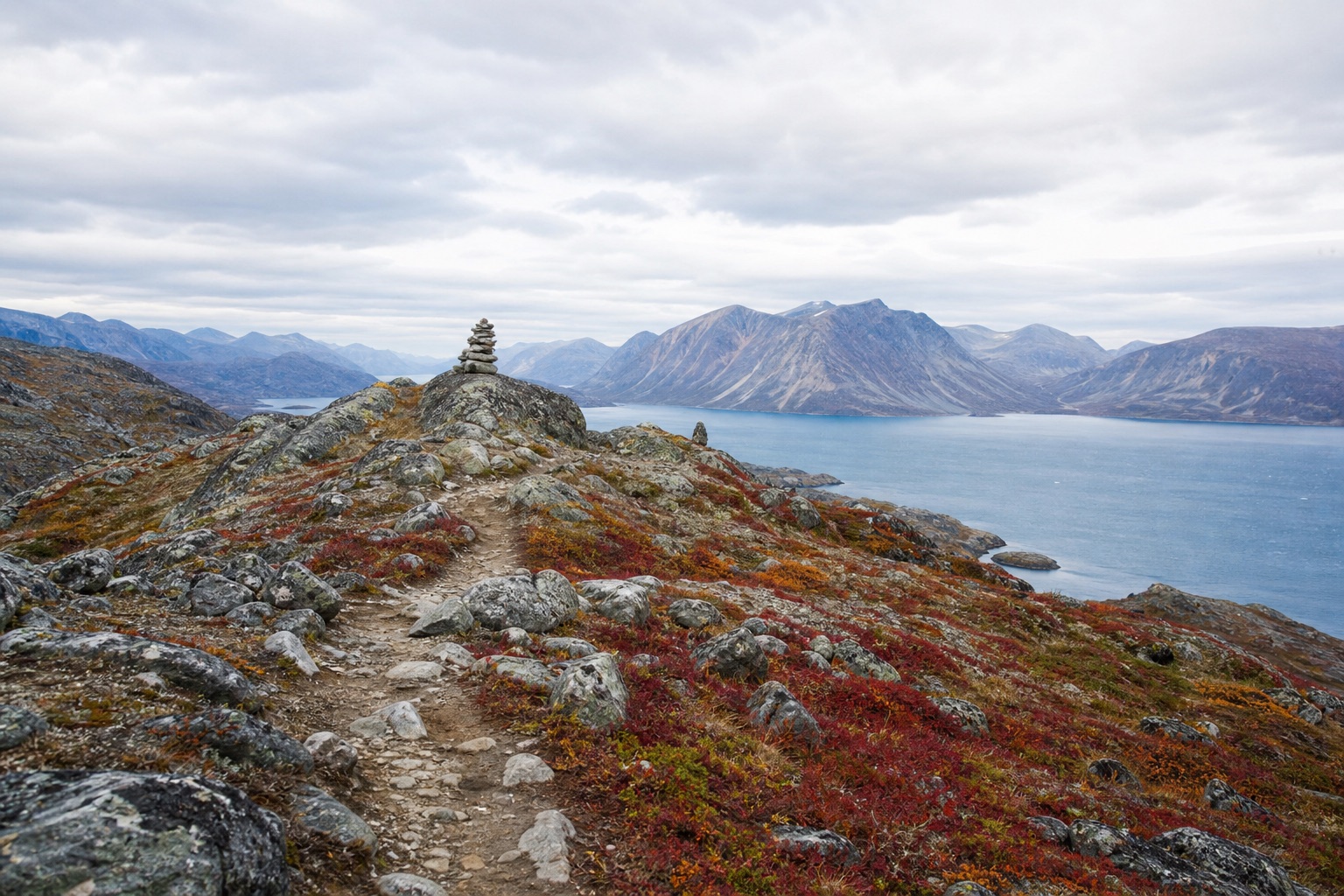
Hiking
Hiking in Greenland takes place in Arctic and subarctic terrain, with the Arctic Circle Trail between Kangerlussuaq and Sisimiut as the main long-distance route. It suits experienced hikers who want to cross roadless mountain country and can manage their own food, shelter and navigation.
Bookable trips
Hiking across Greenland
Choose your city and a local operator. Every trip is booked securely through adventures.gl.
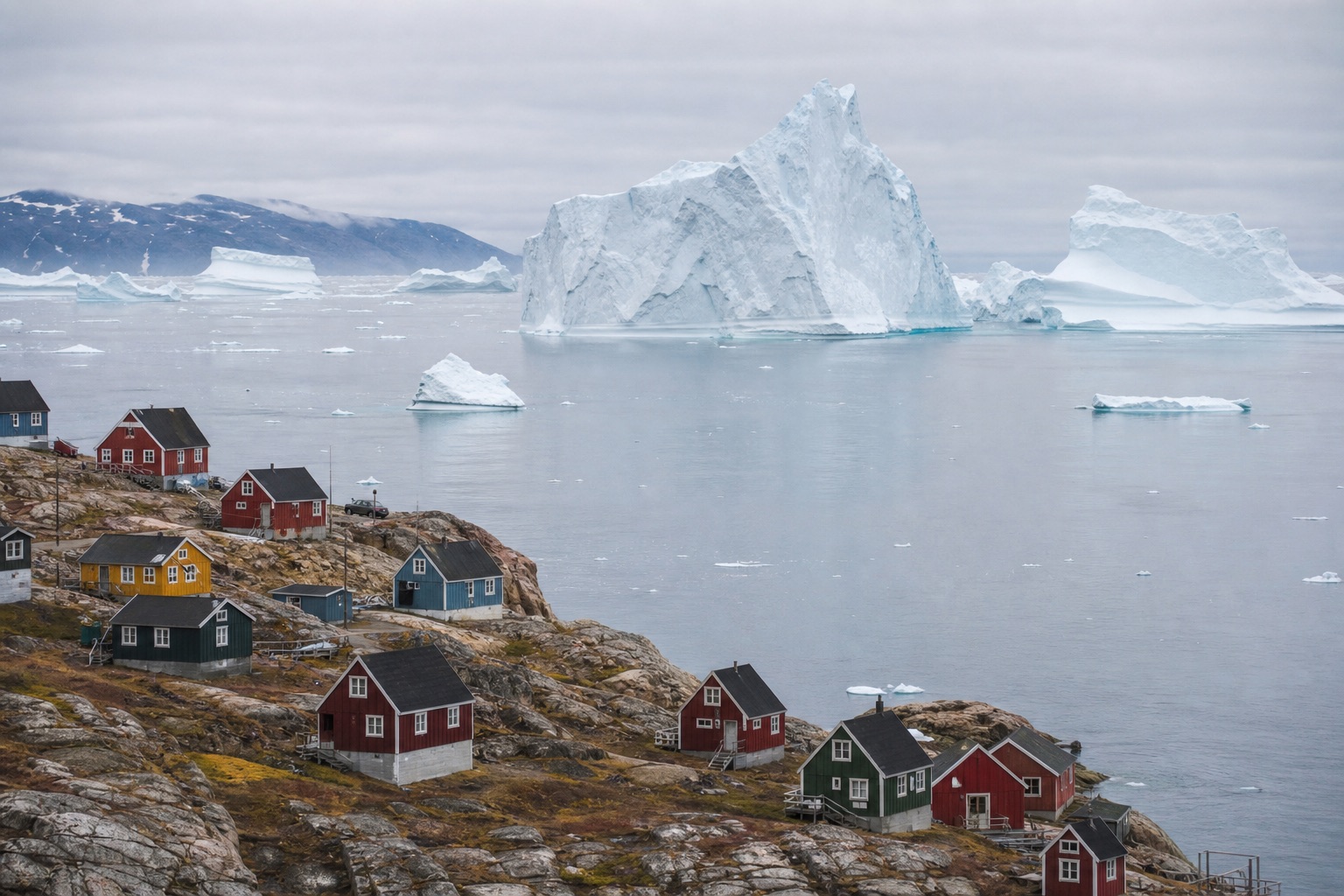
Ilulissat
Hiking
by Kalaallit Journeys
from
600 DKK
/ adult
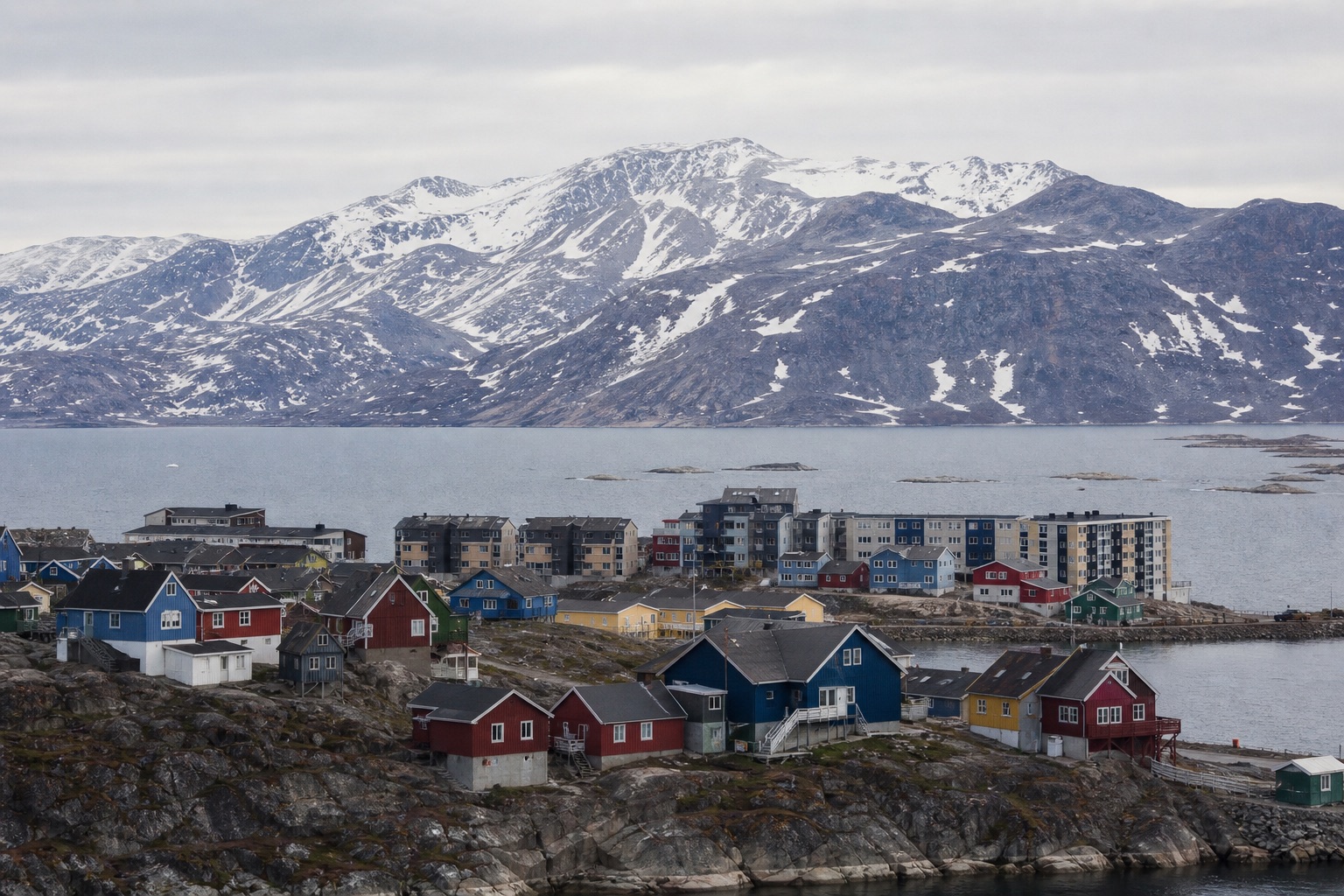
Nuuk
Hiking
by Aputsiaq Voyages
from
650 DKK
/ adult
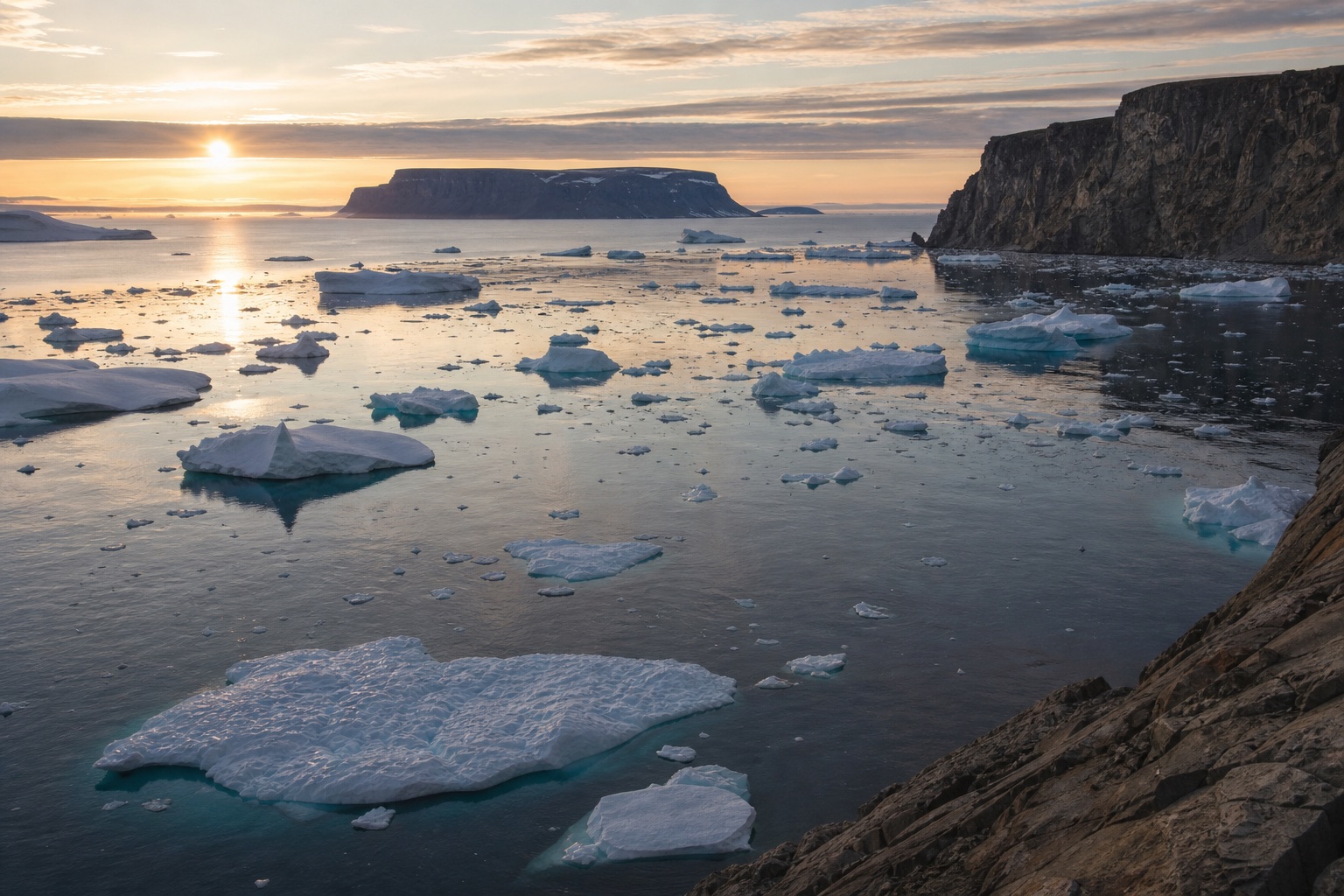
Disko Bay
Hiking
by Nordbo Safari
from
700 DKK
/ adult
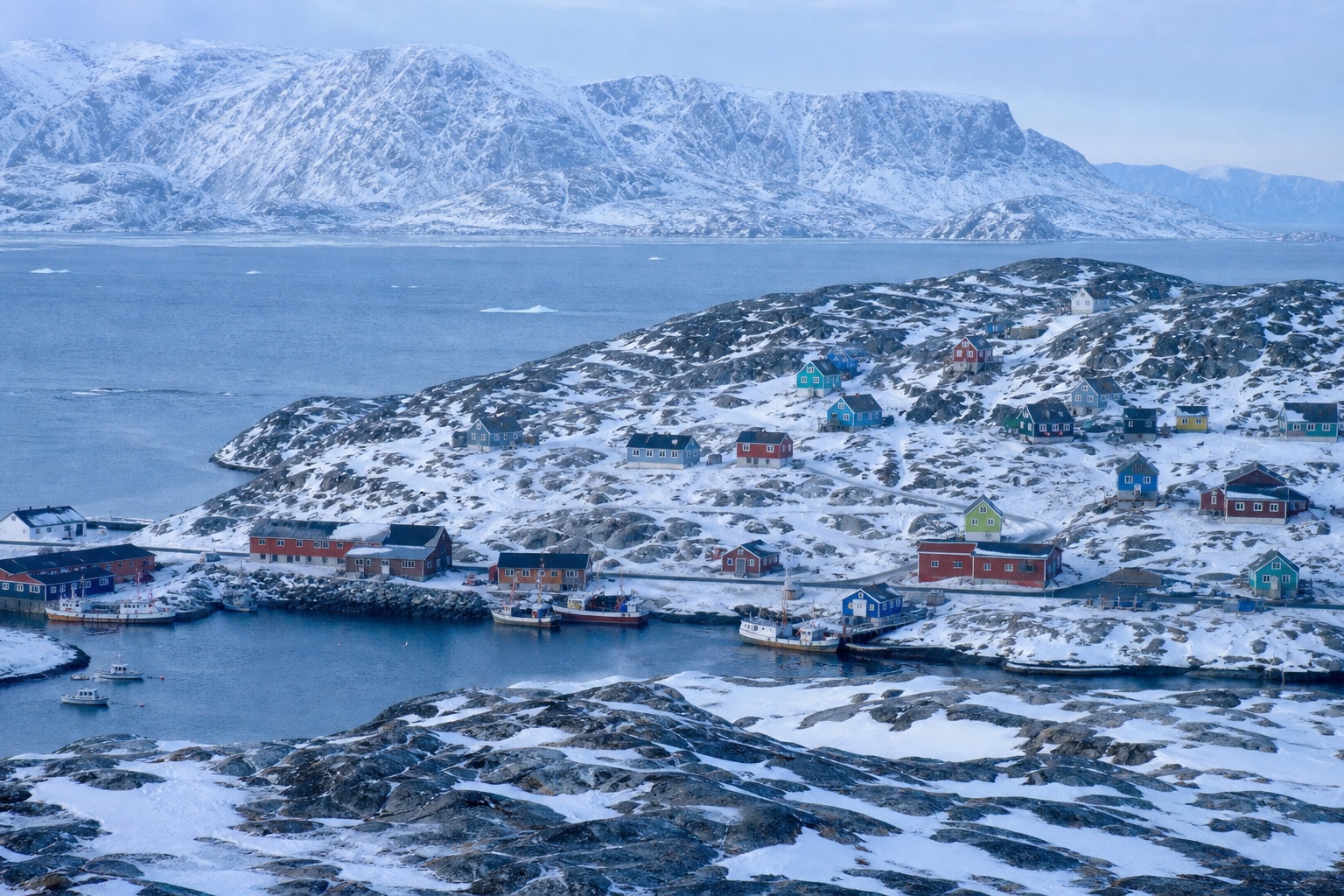
Sisimiut
Hiking
by Qajaq Expeditions
from
650 DKK
/ adult
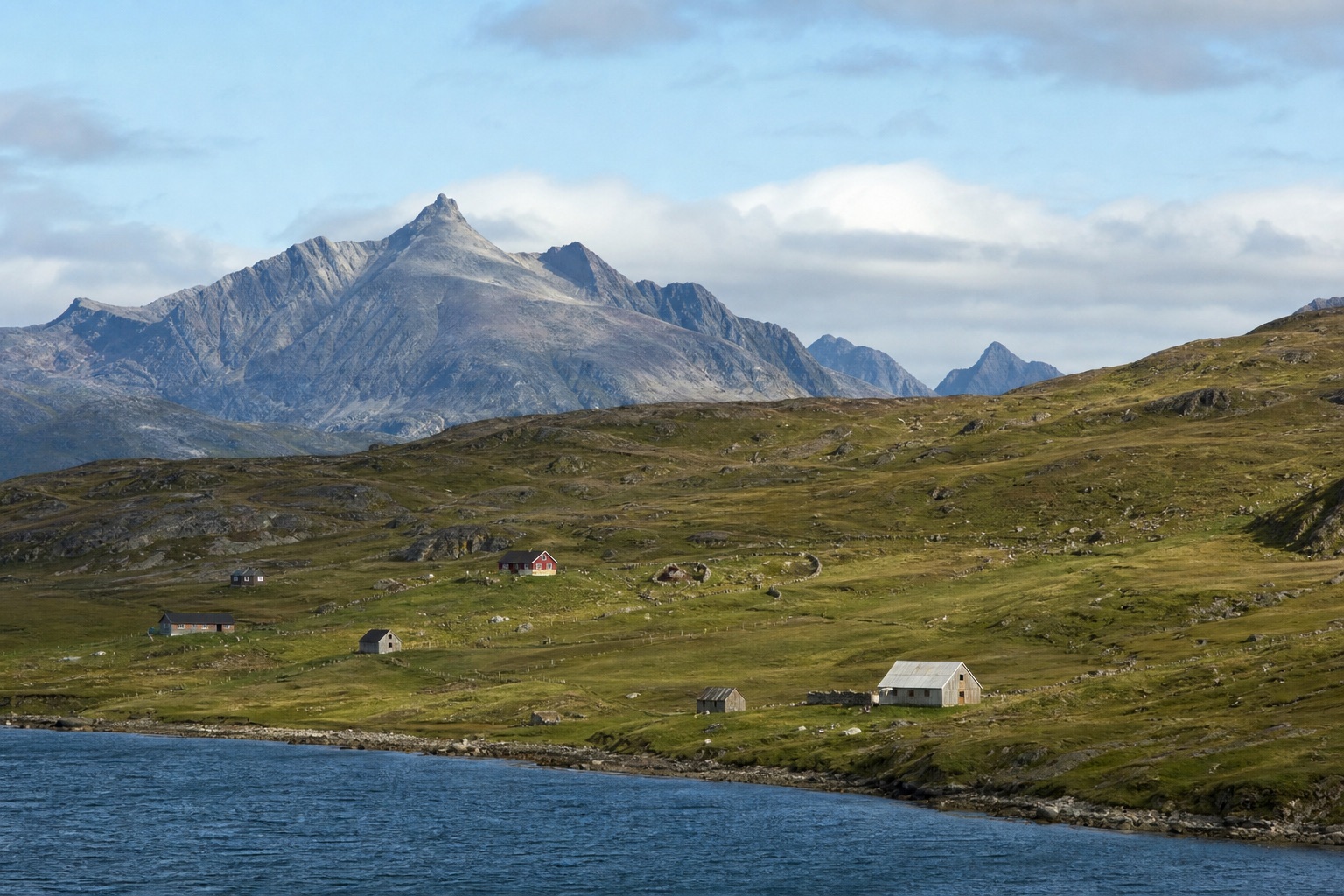
South Greenland
Hiking
by Qajaq Expeditions
from
650 DKK
/ adult
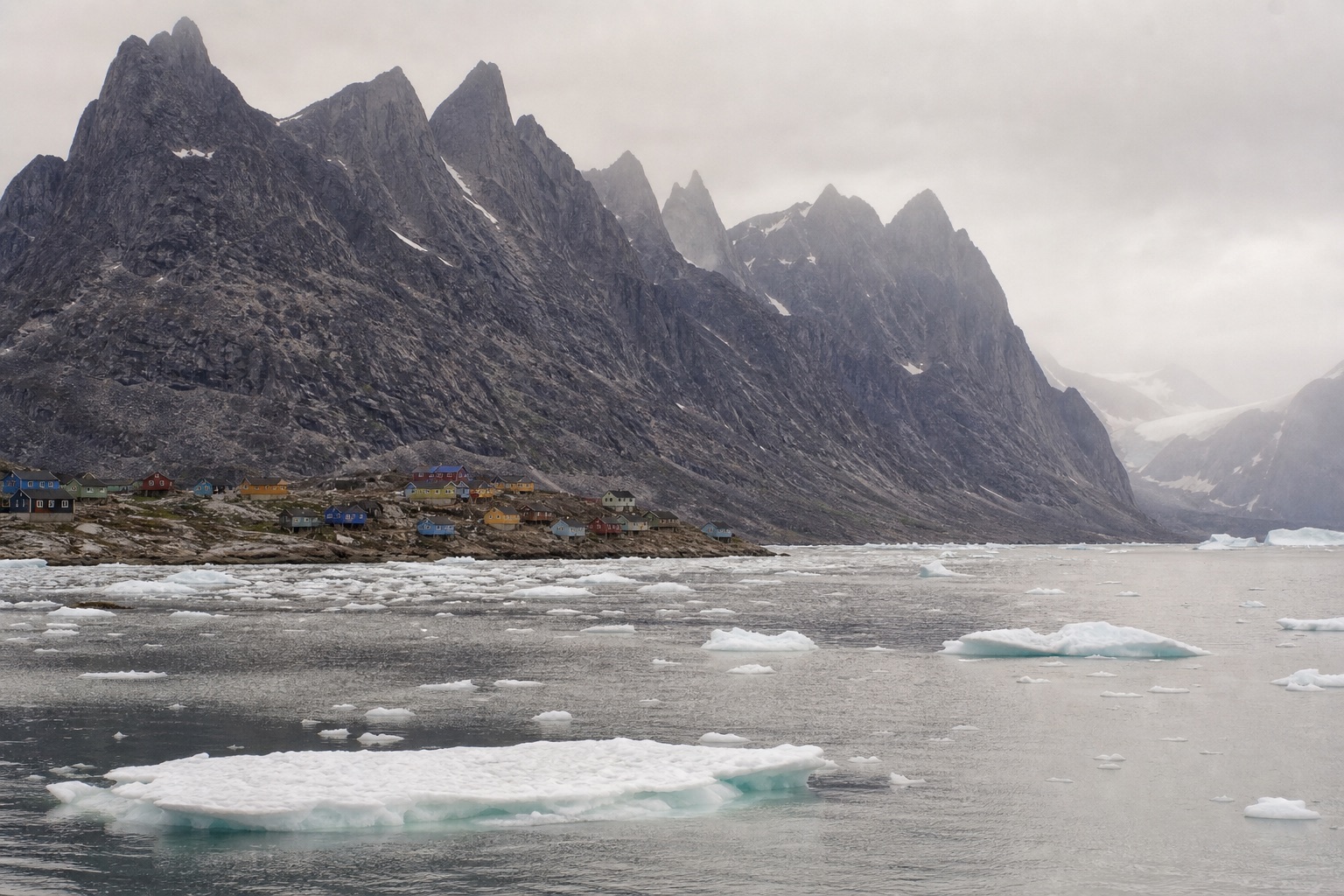
East Greenland
Hiking
by Polar Circle Tours
from
550 DKK
/ adult
Hiking in Greenland
Hiking in Greenland is different from walking in an area with a dense network of marked paths, staffed huts and road access. The terrain is Arctic or subarctic, and longer trips generally require you to carry what you need. This includes food, shelter, suitable clothing and navigation equipment.
The usual hiking season runs from June to September, but conditions are not consistent throughout that period. Weather can change during a single day or across a multi-day trip. Changes in temperature, wind and precipitation may affect both your pace and the practical plan, so we recommend planning around conditions rather than fixed daily distances.
A shorter walk from a town is a reasonable starting point for many visitors. A day hike requires less equipment and allows you to assess the terrain, your clothing and your pace before committing to a longer route. The Arctic Circle Trail is a different undertaking, with planning and self-sufficiency forming part of the hike itself.
The Arctic Circle Trail
The Arctic Circle Trail runs between Kangerlussuaq and Sisimiut. Kangerlussuaq is at the eastern end, while Sisimiut is the western, coastal endpoint. Between them, the route crosses subarctic tundra and fjord and mountain country without roads.
It should be approached as a self-supported long-distance hike rather than a sequence of serviced day stages. There is no equivalent to the groomed paths and regular support found in many established European hiking areas. You need to be able to navigate, manage your food and provide your own shelter with the equipment you carry.
We recommend planning the trip as a whole. This includes travel to the starting point, the expected number of hiking days, extra time for variable weather and onward travel from the endpoint. A tight connection immediately after the planned finish is rarely practical. If your pace drops, the schedule should allow for it without pressuring you to continue in conditions that you would otherwise wait out.
The trail can be walked in either direction. Your choice should fit the wider itinerary and how you want to finish the hike. Sisimiut provides the coastal finish, while Kangerlussuaq is inland. We do not consider either direction generally better; the preparation requirements remain the same.
Hiking season and weather
Longer hikes are normally planned between June and September. Greenland has an Arctic climate, and summer does not mean settled conditions every day. On the Arctic Circle Trail, weather may change within one stage or over several days.
Your clothing and schedule should account for that variability. A plan that only works in dry, calm weather leaves too little room. We recommend adjustable layers and a waterproof, windproof outer layer. Warm clothing should be accessible without emptying the whole backpack, while a dry set for breaks and camp should be kept separate from clothing used during the day.
Changing weather also affects navigation. Terrain that is easy to read in clear conditions may require more attention when visibility deteriorates. Navigation should not depend on always being able to see a distant feature or follow other hikers.
Allowing spare time is equally important. It can be used for a shorter day, a later start or a pause when continuing would be impractical. On a self-supported route, a reserve day is part of the plan rather than wasted time.
Self-sufficiency on a multi-day hike
On the Arctic Circle Trail, you need to carry food, shelter and navigation equipment. This creates different demands from a day hike that ends back at the same accommodation. Your pack must contain enough for the full trip while remaining realistic to carry day after day.
We recommend testing both your backpack and equipment before travelling. It is not enough for everything to fit; the loaded pack must be manageable over several days on uneven ground. Boots or hiking shoes should already be broken in. Waterproof clothing, a tent or other shelter, and cooking equipment should all have been used in practice before departure.
Plan food for the entire route and include a reserve. Meals must be possible to prepare with the cooking equipment and fuel you have chosen to carry. We favour a straightforward plan with quantities checked in advance rather than packing on a loose estimate. You should know your daily requirements and what has been allocated to each part of the trip.
Self-sufficiency also means handling minor problems without changing the entire itinerary. A basic repair kit for essential equipment, first-aid supplies and waterproof protection for dry clothing and sleeping gear should be included. The point is not to carry equipment for every conceivable situation, but to know what you have and be able to use it.
Navigation and route planning
Navigation is a basic requirement in roadless terrain. We recommend carrying more than one way to establish your position and direction. A digital device can be useful, but it should not be the only option. A depleted battery, moisture or damage to the device must not remove your entire means of navigation. A map and compass are suitable as primary tools or as a backup, provided you know how to use them.
Divide the route into realistic days without making the schedule so rigid that you must reach a particular point every evening. Terrain and weather may produce a different pace from the one expected. It is better to allow options for shorter stages than to make every day dependent on maintaining a high average speed.
Before leaving, give a contact person your overall route, planned direction and expected arrival time. The plan should also specify when that person should act if the group is delayed. This does not replace your own preparation, but it establishes a clear arrangement around the hike.
Decisions about continuing should be based on the conditions at the time. A schedule is a planning tool, not an obligation. If the weather, equipment or physical condition of the group does not suit the planned day, the stage should be changed.
Equipment for Greenland’s terrain
The exact equipment list depends on the length of the hike, but the necessary functions remain broadly the same. You need to stay warm and dry, sleep with adequate protection, prepare food and navigate. Your backpack and footwear must also suit you personally.
Layered clothing makes it easier to regulate temperature while walking and during breaks. A waterproof, windproof outer layer remains relevant even when the forecast looks calm at departure. A hat, gloves and an insulating layer take up relatively little space compared with their value when the temperature falls or the wind increases.
Shelter and sleeping equipment must be suitable for a multi-day trip in an Arctic climate. We recommend practising setup and packing before travelling so that neither takes unnecessary time on the route. Anything that must remain dry should have an additional barrier against moisture.
Navigation equipment, first-aid supplies and repair items should be easy to locate. The same applies to outer clothing and food needed during the day. An organised backpack is not only more comfortable; it also makes it easier to respond to a weather change without a long stop.
Physical preparation
The Arctic Circle Trail requires you to walk for several consecutive days with a full pack. General fitness is only one part of the preparation. Your feet, shoulders and legs also need to be accustomed to the pack weight and repeated days on uneven ground.
We recommend training with the equipment you intend to bring to Greenland. Start with shorter walks and gradually increase both the weight and duration. At least one overnight test hike allows you to check whether the packing list works as a complete system. This is often when unnecessary items, inaccessible equipment or incompatible choices become apparent.
Set the pace according to the slowest person in the group. If you are walking with others, agree before departure on breaks, daily duration and how decisions will be made in poor weather. This reduces the risk of the group separating or making rushed decisions along the way.
Getting to and from the trail
Air Greenland flies from Nuuk to both Kangerlussuaq and Sisimiut. These connections allow the start and finish to be included in a wider trip through Greenland. Check the operating days when booking, and leave flexibility around the hiking period.
If the trail is one part of a longer itinerary, treat it as a separate section with its own reserve days. This matters particularly when the next connection cannot easily be moved. Do not assume that forgotten or inadequate equipment can be replaced once the hike has begun. The final equipment check needs to be completed before leaving town.
Is the Arctic Circle Trail suitable for you?
The Arctic Circle Trail is intended for hikers who are already comfortable with multi-day trips and can manage their own camp, food and navigation. It is less suitable as a first attempt at hiking with a full pack or for anyone expecting daily services along the route.
Less experienced hikers should begin with shorter trips and build familiarity with Greenlandic terrain and variable weather. This provides a better basis for deciding whether to take on a longer self-supported route later.
Hiking here does not require forcing the pace. What matters is that the plan, equipment and experience are consistent with one another. When those elements are in place, the Arctic Circle Trail becomes a practical journey between Kangerlussuaq and Sisimiut rather than a route governed only by the calendar.