
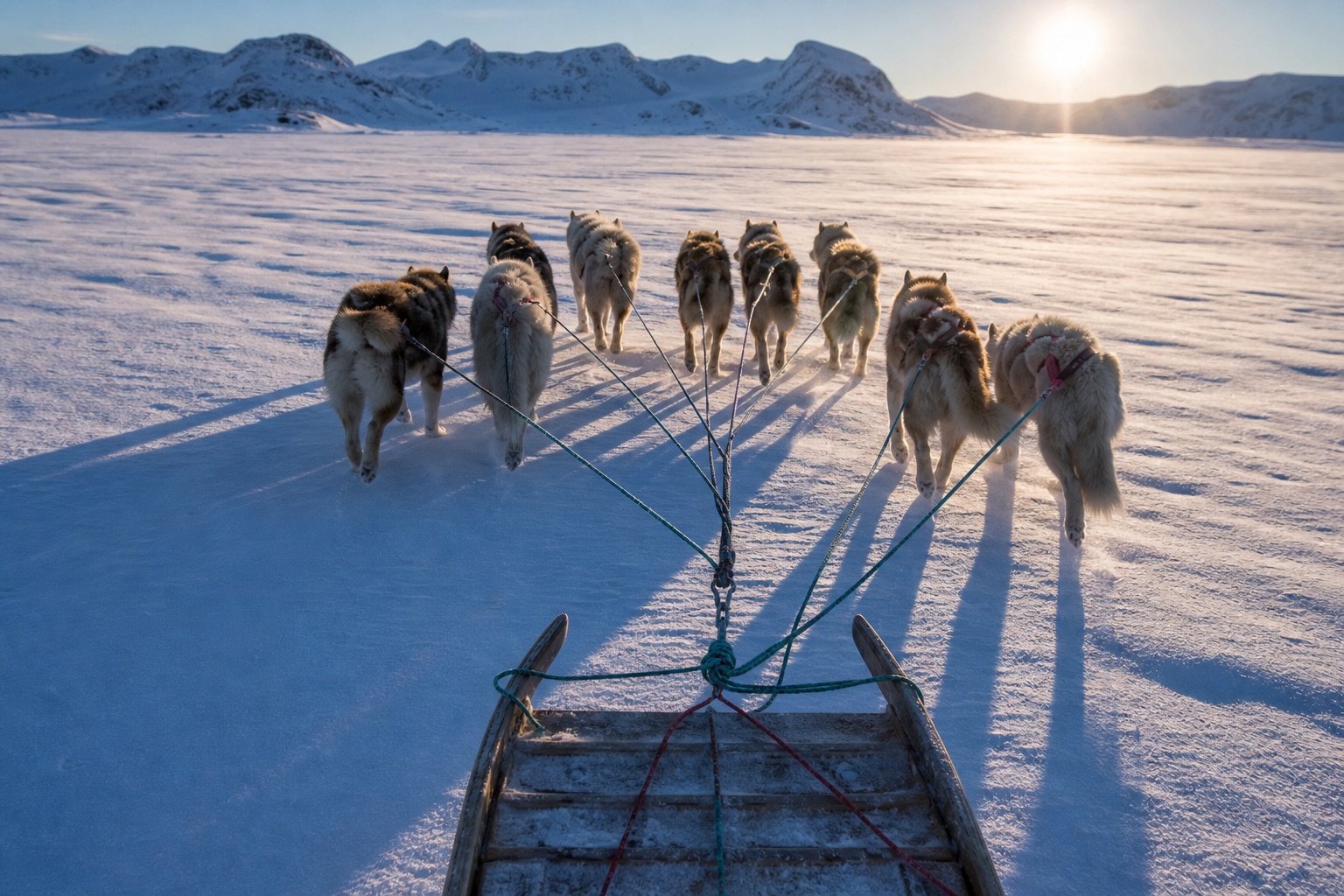
Dog Sledding
Dog sledding in Greenland runs from January to April and only within the legally defined dog-line district. Go to join a living working tradition, but choose your destination, clothing and trip length carefully.
Bookable trips
Dog Sledding across Greenland
Choose your city and a local operator. Every trip is booked securely through adventures.gl.
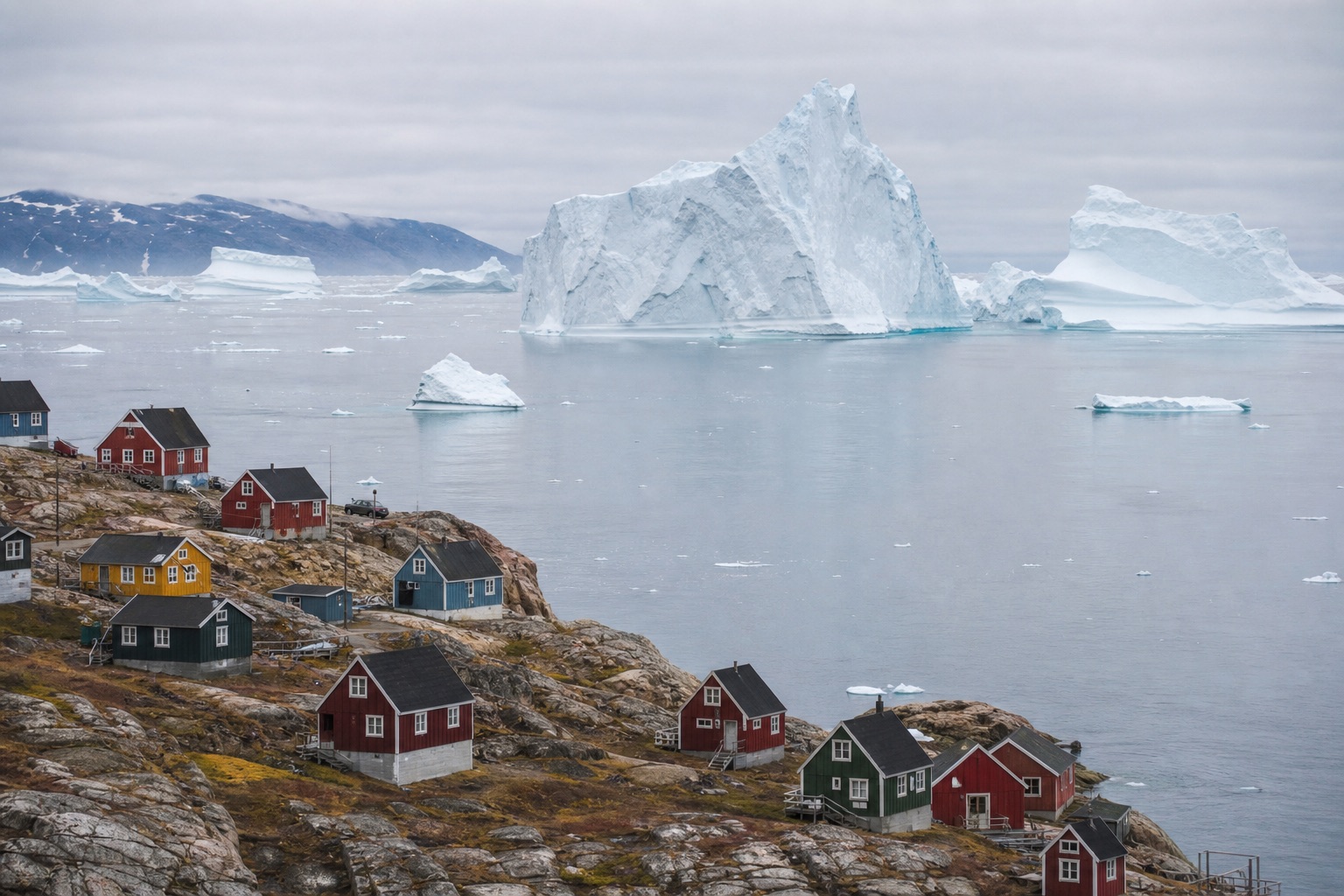
Ilulissat
Dog Sledding
by Anori Coast Expeditions
from
1,500 DKK
/ adult
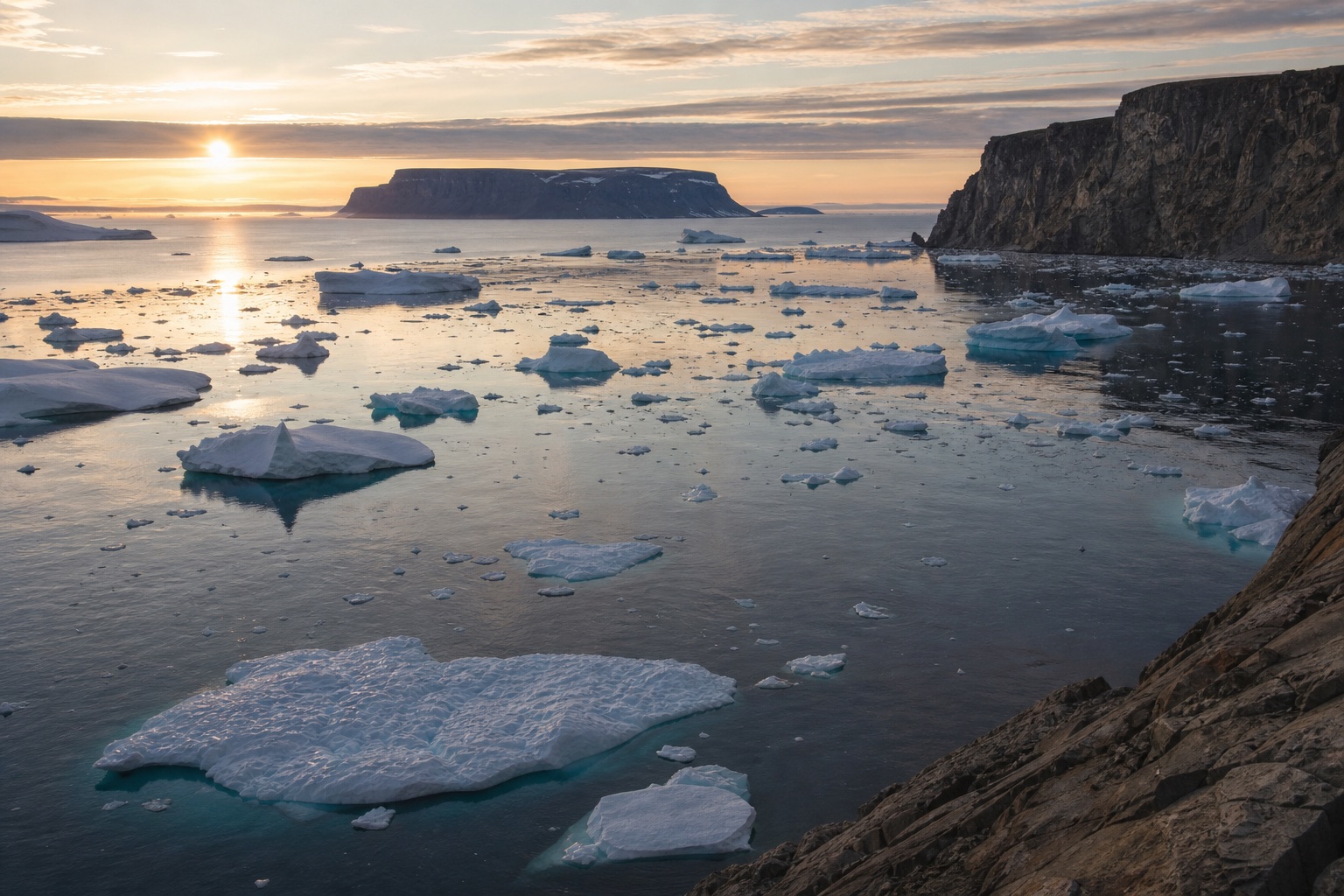
Disko Bay
Dog Sledding
by Polar Circle Tours
from
1,350 DKK
/ adult
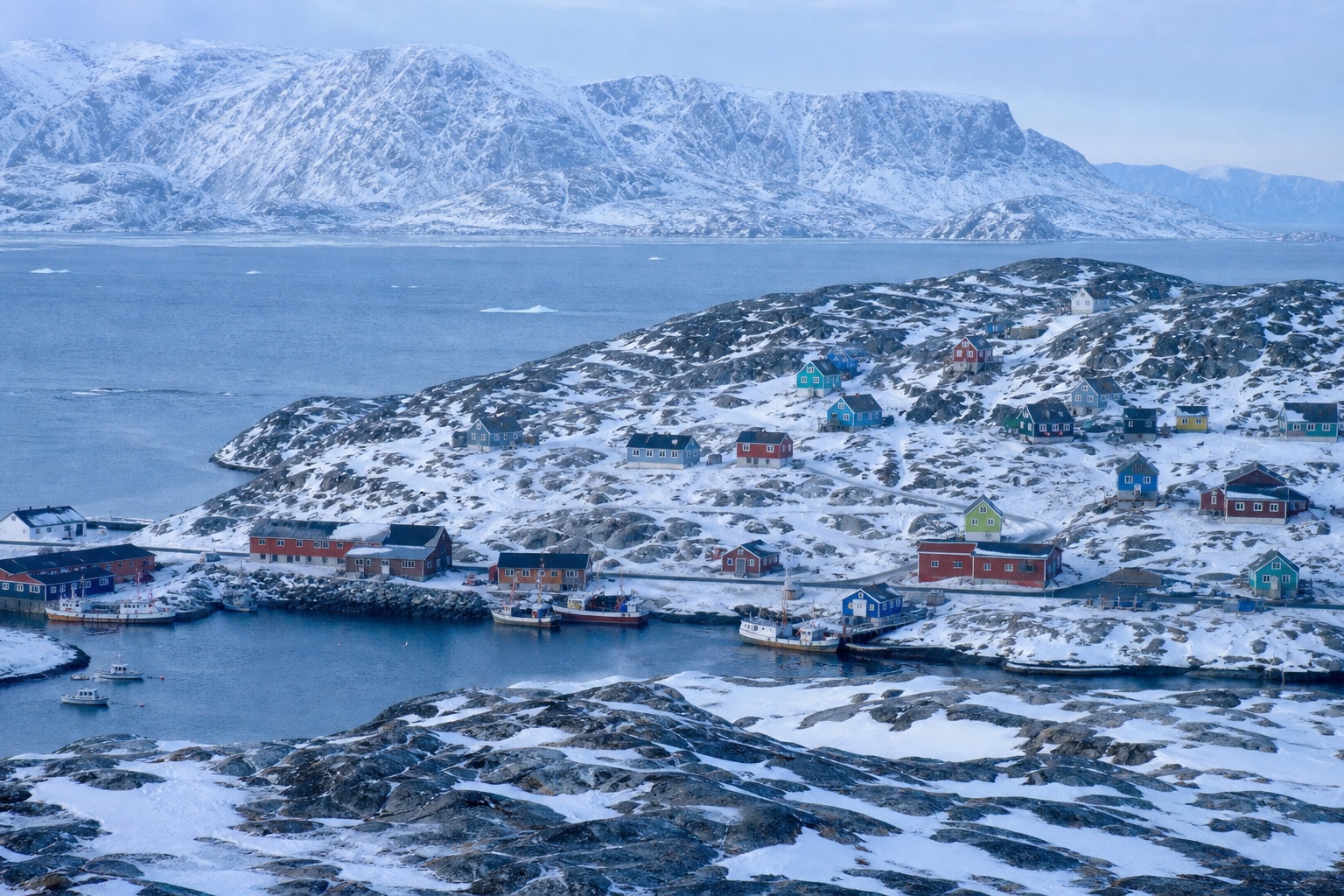
Sisimiut
Dog Sledding
by Sikuaq Ice Safaris
from
1,550 DKK
/ adult
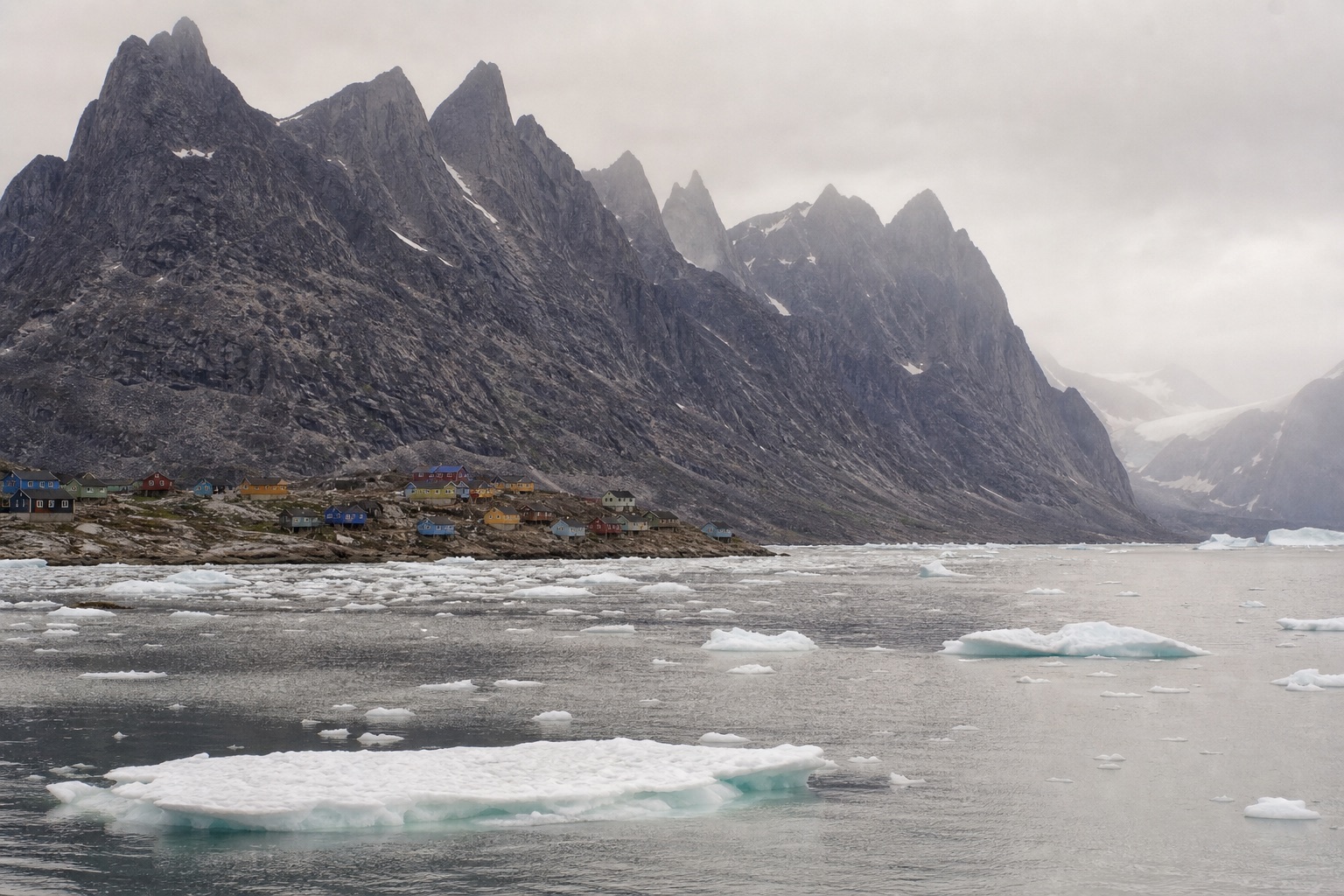
East Greenland
Dog Sledding
by Sikuaq Ice Safaris
from
1,550 DKK
/ adult
A living working tradition
Dog sledding in Greenland is not a themed activity created solely for visitors. The dogs are working animals, kept and driven by Greenlandic mushers as part of an ongoing practice. When guests take a trip, they are joining something that already exists rather than a ride staged purely for tourism.
That distinction affects how the trip works. The dogs are not pets, and the journey takes place on the working terms of the team and the musher. The musher is responsible for the dogs, the route and decisions made along the way. Passengers must follow the instructions they are given and should not expect the same scope for adjustments that they might have during an ordinary vehicle journey.
Passengers sit close to the surface and remain outside in the cold for an extended period. The movement of the sled, the wind and changes in the conditions underfoot are all felt directly. This simple form of transport is central to the activity, but it also places specific demands on clothing and physical comfort. Previous dog-sledding experience is not required. Proper preparation is.
The dog line: where dog sledding is permitted
Dog sledding is legally restricted by the boundary known as the dog line. The permitted district covers West Greenland north of the Arctic Circle, plus East Greenland. Ilulissat and Sisimiut are both within the legal district in West Greenland, north of the Arctic Circle, and dog-sledding trips are offered in both towns.
The restriction is equally important when deciding where not to travel for this activity. Dog sledding does not exist in Nuuk, Qaqortoq or anywhere in South Greenland. A stay in Nuuk or South Greenland therefore cannot include a local dog-sledding trip. If dog sledding is a priority, the itinerary must include a destination within the dog line, such as Ilulissat or Sisimiut.
We recommend settling this geography before booking flights and accommodation. Greenland is large, and dog sledding is not an activity that can simply be added in every town after arrival. Choose the destination around the activity rather than assuming that sled dogs operate throughout the country.
The dog line also explains why dog sledding has a different role in different parts of Greenland. It is not a nationwide visitor activity with the same availability everywhere. It is a regional working practice with a clear legal boundary.
Dog-sledding season: January to April
The dog-sledding season runs from January to April. If it is an important part of the trip, those are the months to plan around. Outside that period, we would not build an itinerary around dog sledding.
Conditions are not uniform across all four months. January falls in the middle of the Arctic winter, while the days grow longer towards April. Temperature, wind, visibility and surface conditions can change during the season and from one day to the next. Choosing a particular month does not guarantee particular conditions on the day of departure.
Early in the season, passengers should be prepared for limited daylight and low temperatures. Later in winter and towards spring, there is more daylight, and protection against glare from the snow can become increasingly important. April remains part of the dog-sledding season, but that does not mean every day or route will be the same. Local conditions determine what can go ahead.
Leave some flexibility in the itinerary where possible. Dog sledding takes place outdoors and depends on conditions that no organiser can control. Before booking, ask how changes are handled and what happens if the planned trip has to be adjusted. That is more useful than choosing a date based on an expectation of a particular temperature or type of surface.
What a trip involves physically
A passenger sits on a moving sled for an extended period. Although the musher drives the dog team, the journey is not physically neutral for the person sitting behind. The body continually absorbs the movement of the sled while the passenger remains relatively still and tries to stay warm. Cold is often more noticeable when we are sitting rather than walking or working actively.
Trip length therefore matters. A short introduction and a longer journey do not place the same demands on the body, even though both use a dog sled. Ask for the expected duration and consider it in relation to your experience of spending time outside in winter. Choosing a realistic trip is better than overestimating how long you can sit comfortably in the cold.
Anyone with a back, joint or circulation condition must disclose it before booking. The same applies if there is any uncertainty about sitting safely on a moving sled for a prolonged period. The strain is different from walking, skiing or travelling in a car, and the organiser needs enough information to assess whether the trip is suitable.
Passengers must also be ready to follow short, direct instructions. The musher assesses the conditions and handles the dogs. The passenger’s role is not to interfere with the driving, but to sit where directed, keep hands and equipment contained, and speak up if cold or discomfort begins to become a problem.
Full cold-weather packing list
Clothing should be based on a complete layering system rather than one heavy garment. Each layer has a separate purpose, and the full combination should be tried before travelling.
Start with a moisture-wicking base layer covering both the upper and lower body. It should move moisture away from the skin. Avoid cotton as a base layer: cotton stays wet, dries slowly and stops insulating effectively when damp. That can become a practical problem when sitting still on a sled in the cold.
Add an insulating mid layer over the base layer. It should retain warmth without fitting so tightly that the layers are compressed. Conditions may call for more than one insulating layer, but the full arrangement must still allow comfortable movement. Test the base, mid and outer layers together rather than assessing each item separately.
The outer layer must be both windproof and waterproof. Wind protection is particularly important on a sled because passengers are exposed while producing relatively little body heat. The jacket and trousers should close properly at the wrists, ankles, neck and waist without restricting movement.
For the hands, wear warm mittens over thin liner gloves. Mittens generally retain heat better than ordinary gloves because the fingers remain together. The liners make it possible to operate a zip, phone or camera without removing all hand protection and exposing bare skin. Ordinary gloves alone are not the best arrangement for an extended period in the cold.
Choose roomy, well-insulated winter boots. They must leave enough space for thick socks and allow the toes to move. Boots that become tight when worn with winter socks reduce insulation and can make the feet colder. Try the boots with the exact socks intended for the trip. We also recommend carrying a spare dry pair of socks.
The hat must cover the ears fully. A hood can provide another layer of protection, but it should not be the only protection for the head and ears. Bring separate neck and face protection so exposed skin can be covered when the wind increases. The hat, neck covering and face protection need to work together without leaving gaps between them.
Bring eye protection against wind, sun and glare from the snow. It should stay securely in place and fit properly with the hat and face protection. Eye protection becomes particularly relevant as daylight increases later in the season, but wind and snow glare can matter throughout the January-to-April period.
Pack hand warmers and toe warmers as an additional margin. They do not replace suitable mittens, boots, socks or clothing layers. Keep them somewhere easy to reach before the hands become cold, read the instructions before the trip, and bring enough for the expected duration.
Phone and camera batteries drain quickly in the cold. Keep phones, cameras, spare batteries and portable power sources warm and close to the body, preferably in an inner pocket. Take them out only when needed. Do not leave a phone or battery in an outer pocket or an open bag on the sled for an extended period.
Keep smaller items together and secured. Loose equipment is awkward on a moving sled, particularly when wearing mittens. Phones, cameras, eye protection, hand warmers and spare face protection should each have an assigned place that can be reached without removing outer clothing.
Before departure, confirm exactly which outerwear and boots the trip supplies and which items the guest must bring. Some trips may provide particular pieces of outer clothing or footwear, while others may expect passengers to arrive with everything themselves. A general statement that warm clothing is included is not precise enough. Ask specifically whether the supplied equipment includes a jacket, trousers, boots, mittens and other protection, and confirm what must be worn underneath it.
The packing discussion should also include health information. Disclose any back, joint or circulation condition before booking, because sitting on a moving sled for an extended period is physically demanding in a specific way. Limited mobility or a history of difficulty keeping the hands and feet warm should also be raised in advance rather than at departure.
Choosing and booking a dog-sledding trip
Start with the destination. Ilulissat and Sisimiut are within the legally permitted dog-line district in West Greenland north of the Arctic Circle. Nuuk, Qaqortoq and the rest of South Greenland are not alternatives for dog sledding because the activity is not practised there.
Next, check the timing. Travel must fall between January and April, and the itinerary should allow for weather and surface conditions to affect the plan. Ask about the trip’s expected duration, its physical demands, the clothing requirements and the exact division between equipment supplied by the trip and equipment guests must bring themselves.
Health conditions should be discussed at the booking stage. Tell the organiser about any back, joint or circulation problems, limited mobility, or previous difficulty keeping the hands and feet warm. This provides a sounder basis for choosing a suitable trip and is more responsible than first mentioning it immediately before departure.
It is also important to book with the right understanding of the activity. Guests are entering a living working tradition alongside a Greenlandic musher and a working dog team. A trip should not be assessed as an amusement ride with a fixed script. Local conditions, the dogs and the musher’s decisions set the practical framework, and passengers need to be prepared to follow it.