
Dog Sledding in Ilulissat
Dog-sledding trips from Ilulissat operate from January to April when winter conditions allow travel. Go to experience this form of transport within its legally permitted district, but prepare carefully for the cold.
Dog sledding from Ilulissat
Ilulissat is north of the Arctic Circle and therefore within Greenland’s legally permitted dog-sledding district. By law, dog sledding is restricted to West Greenland north of the Arctic Circle and to East Greenland. It does not exist in Nuuk, Qaqortoq or anywhere in South Greenland.
Trips from Ilulissat operate during winter, when snow, ice and temperature conditions allow sled travel. This is not an excursion that can be added to a summer itinerary. The season runs from January to April, and the route is determined by the conditions on the day, including temperature, wind, visibility and the state of the surface.
There is no single standard route followed by every trip. Duration, departure point and route depend on the booking and the winter conditions. Read the booking confirmation carefully and confirm the meeting point, meeting time, expected duration and included equipment before travelling.
The January to April season
January to April is the normal dog-sledding season in Ilulissat. That does not mean every date offers the same conditions, or that one route can operate throughout the winter. In an Arctic climate, current conditions decide what is safe and practical.
Early in the season, prepare for pronounced cold and limited daylight. The light changes later in winter, but low temperatures and wind remain part of the trip. Northern lights can be visible in Greenland from September to April, although we would not book a dog-sledding trip on the assumption that they will appear. They require darkness and suitable weather and cannot be guaranteed.
If dog sledding is the main reason for visiting Ilulissat, we recommend allowing more than one day in town. Weather can affect both local activities and transport, leaving little room for changes in a tight itinerary. An extra day does not guarantee that a trip will depart, but it makes the plan less vulnerable to disruption.
What the trip involves
A trip starts with practical instructions from the responsible musher. Follow them even if they differ from what you expected before arrival. Where to sit on the sled, how to move around the dogs and how to secure loose equipment are not matters to improvise.
Dog sledding is a form of transport in cold conditions, not a heated sightseeing tour. Passengers sit relatively still for extended periods, so the temperature can feel more demanding than it does while walking. Wind adds to the exposure, particularly around the hands, feet and face. The surface can also produce movement and jolts during the journey.
The physical demands depend on the trip’s duration and the conditions. Anyone with back, knee or circulation problems should ask for a clear description of the trip before booking. The same applies if you are uncertain whether you can remain warm while seated for an extended period.
Ask about age requirements and any other participation conditions when booking. These can vary by trip and should not be assumed from a general description of dog sledding.
Winter terrain around Ilulissat
Ilulissat is on the coast of Disko Bay, close to the mouth of the Ilulissat Icefjord. This gives trips from town a different setting from the inland-facing terrain around Sisimiut. Routes from Ilulissat cross coastal winter terrain, with mountains and the bay around them, rather than the open inland terrain towards Kangerlussuaq. The exact route still depends on the surface and weather that day.
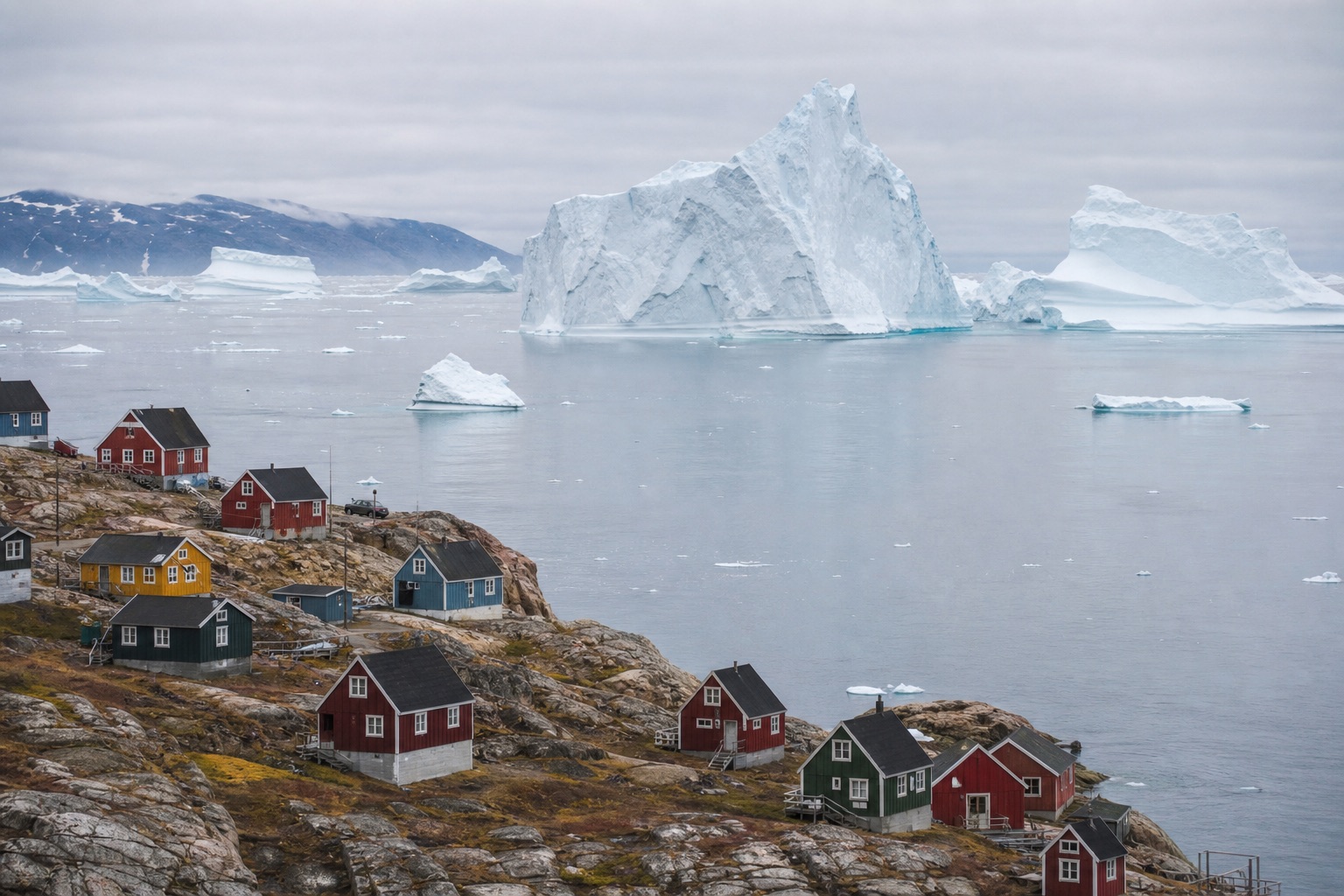
The large icebergs in Disko Bay are mainly a summer feature, typically gathering at the mouth of the Icefjord from summer onwards. In winter, a dog-sledding trip is instead defined by snow, cold and the coastal terrain around Ilulissat. It should not be confused with a boat tour or a summer visit to the Icefjord, even though both start from the same town.
What to wear and bring
Dress for sitting still in severe winter cold rather than for an active walk. Before departure, confirm exactly what cold-weather equipment is supplied and what you must bring yourself. Do this before travelling, not when you arrive at the meeting point.
For the parts you provide, plan a layered system: thermal base layers, insulating middle layers and a wind-resistant outer layer. Bring insulation for the legs as well as the upper body. Hands, feet and face need particular attention, so pack warm mittens or gloves, insulated winter footwear, warm socks, a hat and face protection. Avoid leaving skin exposed if the conditions require it to be covered.
Bring an additional insulating layer that can be added before departure. It is easier to remove a layer while preparing than to discover on the route that there is not enough insulation. Arrive wearing your inner layers so that dressing does not delay the group.
Loose items must be secured. Ask in advance whether a bag can be carried on the sled and how cameras, phones or other small items should be stored. The musher’s instructions take priority once the trip begins.
Flights to Ilulissat during the season
Ilulissat’s own airport opens during 2026, with direct Copenhagen service on Wednesdays. The direct schedule increases to Mondays and Wednesdays over Christmas and New Year and during the winter period from 1 to 27 March 2027. That March period falls within the January-to-April dog-sledding season and provides slightly more flexibility than the rest of the season, although the exact flight date should still be checked closer to travel.
Outside the direct route or the stated periods, Ilulissat can be reached through Nuuk on Air Greenland’s domestic service.
Booking and practical checks
Do not rely on the trip title alone when booking. Ask for the expected total duration, how long you will be seated on the sled, what clothing or equipment is supplied and what you need to bring. Confirm the meeting point and time, and ask when any cancellation or change will be communicated and how the organiser will contact you.
Arrive in good time and already dressed in your base layers. If weather changes the plan, treat that as part of winter operations in Ilulissat rather than expecting a particular route to go ahead regardless of conditions.
Our basic advice is straightforward: choose a date between January and April, leave some flexibility in the itinerary and dress for remaining seated in Arctic cold. The remaining details should be confirmed directly with the person responsible for the trip from Ilulissat.