1. Boat tours among the icebergs at Ilulissat Icefjord
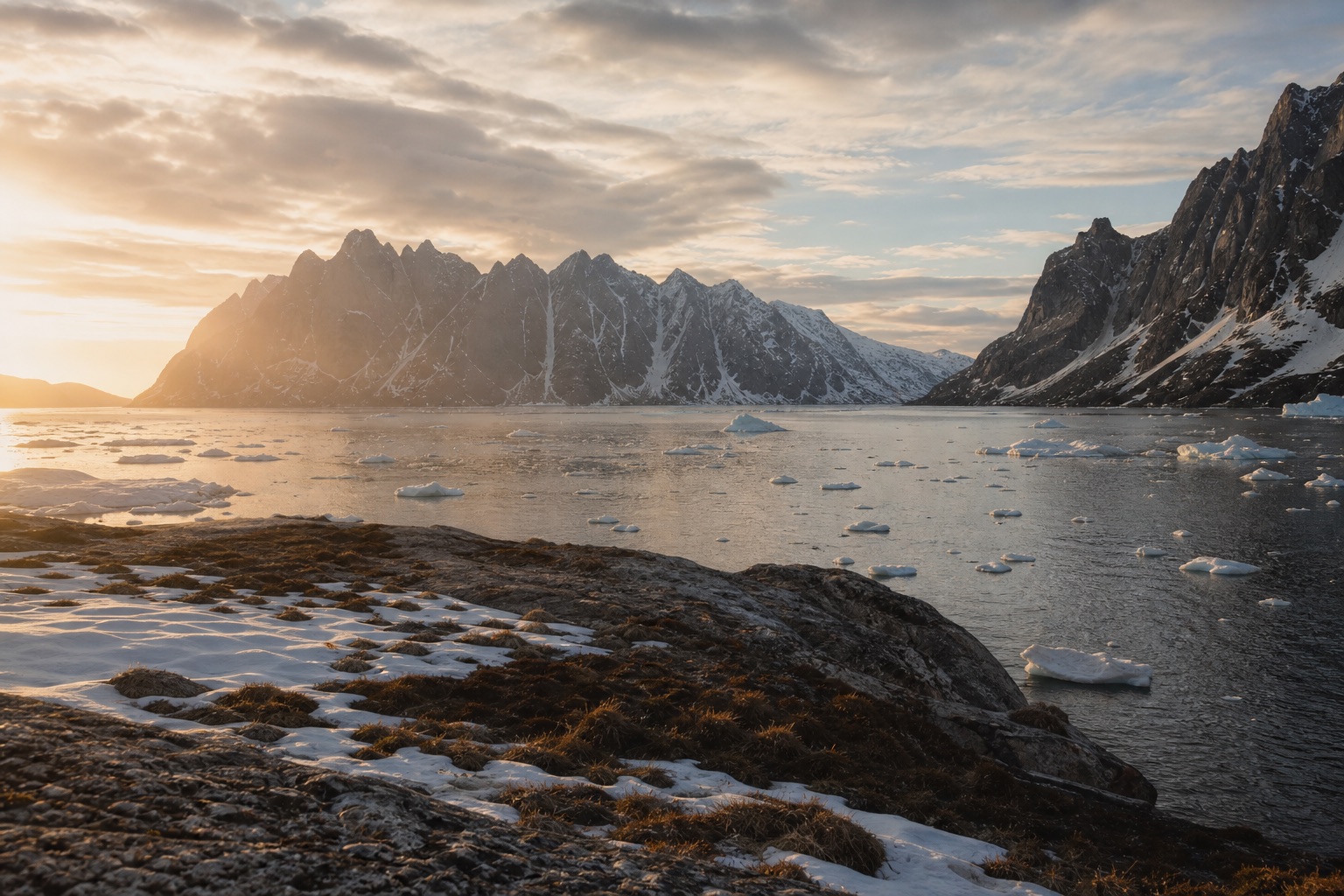
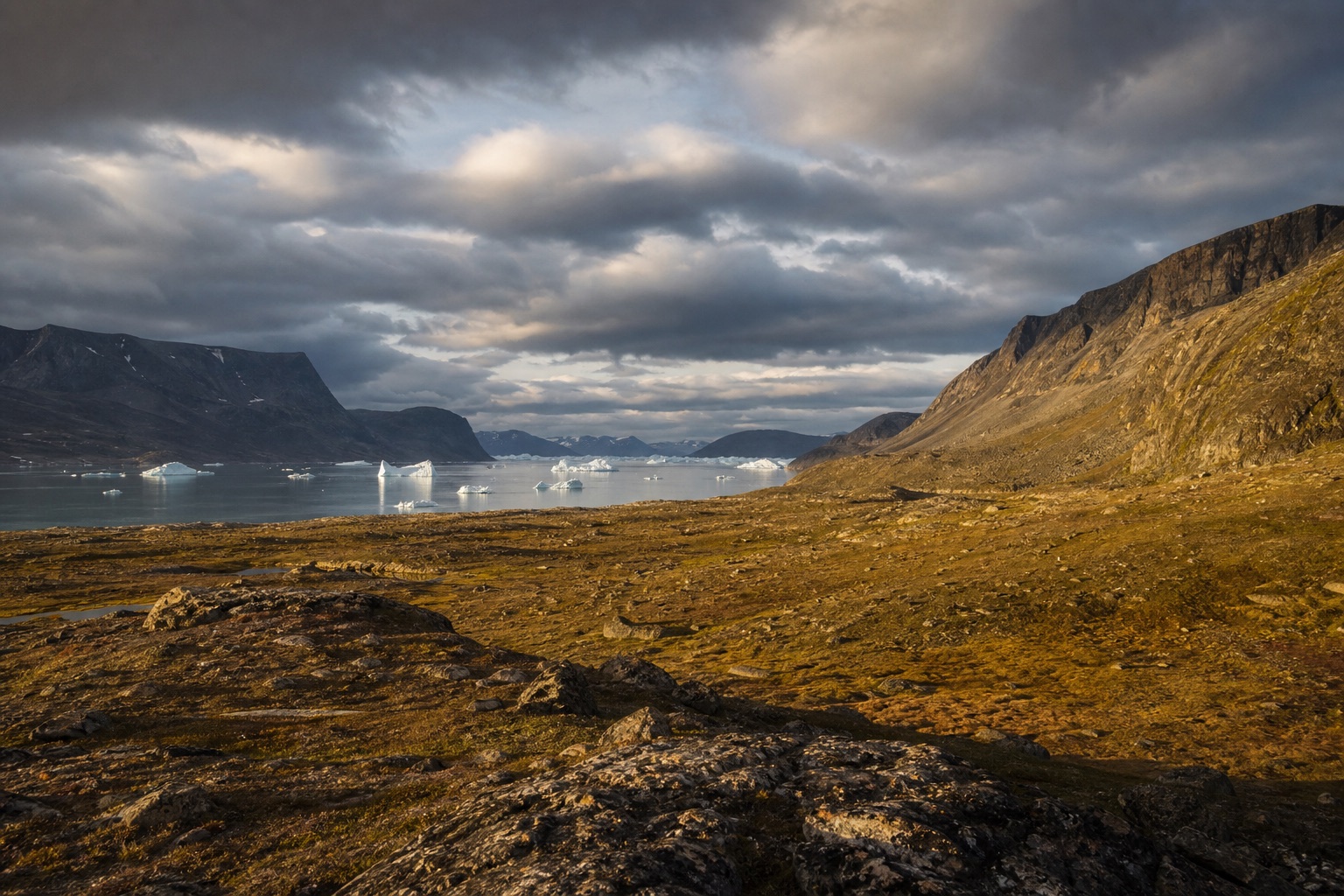
Of the five experiences, a boat tour at Ilulissat Icefjord provides the most direct encounter with Greenland’s ice. The icefjord has been a UNESCO World Heritage Site since 2004. Its icebergs can rise more than 150 metres above the waterline, and around a hundred large icebergs gather at the mouth of the fjord in summer.
Seeing the area from a boat gives a different sense of scale than viewing it from land. However, this is not a fixed route through an unchanging setting. The ice moves, and conditions on the water determine where boats can go on any particular day. We therefore recommend choosing the trip for the experience of being on the icefjord rather than expecting a specific iceberg or sailing route.
Tour length and format vary significantly in price, so compare what is included rather than looking only at the price; our article about prices in Greenland covers the observed price levels for boat tours with source and date. A short tour may be enough if the icefjord is one part of a broader stay. If sailing among the icebergs is the main reason for travelling, it makes sense to allow more time.
This option suits travellers who want to see the ice from the water without committing to a long physical activity. It can also be combined with a whale safari during summer, although the two trips have different purposes. Ice is the focus of an icefjord boat tour. A whale safari is organised around wildlife, with a route that depends on where the animals are.
Our page about boat tours at Ilulissat Icefjord covers tour choices and practical considerations in more detail. For the purposes of this overview, the main distinction is that sailing is the most concentrated of the five experiences. It can fit into a relatively short stay and requires less preparation than dog sledding or hiking the Arctic Circle Trail.
2. Whale safaris in Disko Bay
Roughly 15 whale species occur in Greenlandic waters overall. For a whale safari in Disko Bay, humpback whales are particularly relevant: they are present from mid-June to August. If whale watching is a major reason for your trip, those dates should form the basis of your planning.
Unlike a standard boat tour, a whale safari does not follow a route determined only by the landscape. The trip depends on where the animals are, so it is unwise to plan around a particular number of whales or a specific encounter. The season tells us when humpback whales are present in Disko Bay. It cannot guarantee what will happen on an individual departure.
Many summer visitors will be deciding whether to make a whale safari their main activity or combine it with a boat tour at Ilulissat Icefjord. Both work within the same general travel period, but they should remain separate items in the plan. An icefjord tour has the landscape and accumulated icebergs as its fixed point of reference. On a whale safari, the animals determine the trip, which can involve more waiting and greater variation from one departure to another.
A whale safari is most relevant if you already intend to visit Disko Bay between mid-June and August. Outside that period, we would not build an entire itinerary around seeing humpback whales in the bay. The five experiences in this article belong to different seasons, and it will not normally be possible to include all of them in one trip. Whale watching belongs to summer, while dog sledding and northern lights mainly belong to the colder and darker part of the year.
Our page about whale safaris in Greenland gives the subject fuller treatment, including the points to consider before booking. At overview level, this is the choice for travellers who place wildlife above a predetermined route and accept that a sighting cannot be scheduled like an ordinary stop on an itinerary.
3. Dog sledding north of the dog line
Dog sledding requires the most precise geographical planning of these five experiences. In West Greenland, it is legally restricted to areas north of the Arctic Circle. It is also permitted in East Greenland. This boundary is often called the dog line.
The rule means that dog sledding does not exist in Nuuk, Qaqortoq or anywhere else in South Greenland. It cannot simply be added to any winter stay, regardless of where that stay is based. General assumptions about Greenland are not useful here; the exact destination matters.
The dog-sledding season runs from January to April. If it is the main purpose of your trip, choose both your destination and dates around it from the beginning. It is not an activity that you can reasonably expect to arrange after arrival if the rest of your journey takes place south of the Arctic Circle or outside the season.
Compared with a boat tour or whale safari, dog sledding depends more heavily on the entire itinerary being suited to the activity. That applies not only to the dates but also to the choice between West Greenland north of the Arctic Circle and East Greenland. We suggest deciding first whether dog sledding is a priority, then building the stay around a place where it legally and practically belongs.
The January-to-April season overlaps with the northern lights season, which runs from September to April. Both experiences can therefore be part of the same winter trip, but they rely on different conditions. Dog sledding is tied to season, geography and local conditions. Northern lights require darkness and suitable weather. Travelling at the right time for both does not ensure that every condition will coincide on a particular day.
Dog sledding is appropriate for travellers prepared to let a winter activity determine both their destination and travel dates. It is less suitable as a loosely planned addition to a trip centred on Nuuk or South Greenland, where it is not available at all.
Our page about dog sledding in Greenland explains the activity and its geographical framework in greater depth. The rule to retain from this overview is straightforward: January to April, in West Greenland north of the Arctic Circle and in East Greenland—never in Nuuk, Qaqortoq or South Greenland.
4. Northern lights from September to April
Northern lights are visible from September to April when darkness and weather conditions permit. Of these five experiences, they are the easiest to fit around other plans because they do not necessarily require a full travel day. The corresponding limitation is that they are never guaranteed on a given night.
If seeing the northern lights is a priority, allow several evenings during the season rather than relying on a single night. Cloud can obscure the sky, and there must be enough darkness. A journey between September and April provides the necessary seasonal framework, but it does not remove the effect of the weather.
Northern lights can be combined with dog sledding from January to April. That does not mean both experiences will occur under the same conditions or at the same time. A dog-sledding trip is planned as an activity at a suitable destination north of the dog line in West Greenland or in East Greenland. The northern lights are something to watch for across several evenings. The combination works best for travellers who have already chosen a winter trip and can keep their plans flexible.
In September and October, the northern lights can be an additional part of an autumn visit. In March and April, they can similarly accompany a stay organised around dog sledding. However, the length of the season should not be taken to mean that every night between September and April will produce a sighting. Weather changes, and no booking or timetable can secure a particular result.
The northern lights require less physical preparation than the other experiences on this list, but they often require more patience. They suit travellers who can leave several evenings open and treat a sighting as a possibility rather than a scheduled event. If the value of the entire trip depends on seeing them on one particular night, the plan becomes unnecessarily vulnerable to the weather.
Our page about northern lights in Greenland covers the season and practical planning in full. The decision at this stage is whether the northern lights should be the main purpose of your trip or a possible addition to dog sledding or other activities between September and April.
5. Hiking the Arctic Circle Trail
The Arctic Circle Trail is the long-distance route between Kangerlussuaq and Sisimiut. Its hiking season runs from June to September, and completing it requires self-sufficiency. Among the five experiences, it places the clearest demands on preparation, equipment and independent decision-making along the way.
This is not an ordinary day hike that can be added to a short stay without substantial planning. Self-sufficiency means considering food, equipment, navigation, weather and how to manage changes to the plan before setting out. Greenland’s Arctic climate also makes it necessary to prepare for changing conditions, including during the recognised hiking season.
June to September overlaps with several other summer activities. It is possible to combine a longer hiking itinerary with boat tours or a whale safari elsewhere during the same journey, but enough time must be left around the trail itself. Humpback whales are present in Disko Bay from mid-June to August, while the Arctic Circle Trail season continues through September. A combined trip should therefore be built around exact dates and transport plans, rather than the simple fact that both activities take place in summer.
The trail is suited to experienced hikers who want the journey to centre on a continuous route and their own effort. It is not the obvious choice for travellers who mainly want short, organised activities with fixed start and finish times. Conversely, it makes sense when the hike is the main purpose of the trip and the other experiences are treated as possible additions before or afterwards.
This is also the experience for which we recommend being most direct about your own level of preparation. An interest in hiking is not the same as experience of a self-sufficient long-distance route. If there is doubt about whether this format is suitable, a shorter hiking activity may be a more reasonable choice without making the Arctic Circle Trail the goal of a first trip.
Our page about hiking the Arctic Circle Trail covers route planning and preparation in depth. For this overview, its difference from the other four experiences is clear: the trail requires the most time and independence. Boat tours, whale safaris, dog sledding and northern lights can more readily form defined parts of a stay, although each still depends on the correct season and, in the case of dog sledding, the correct geography.
Last reviewed July 31, 2026