Start with the fact that there are no roads between towns
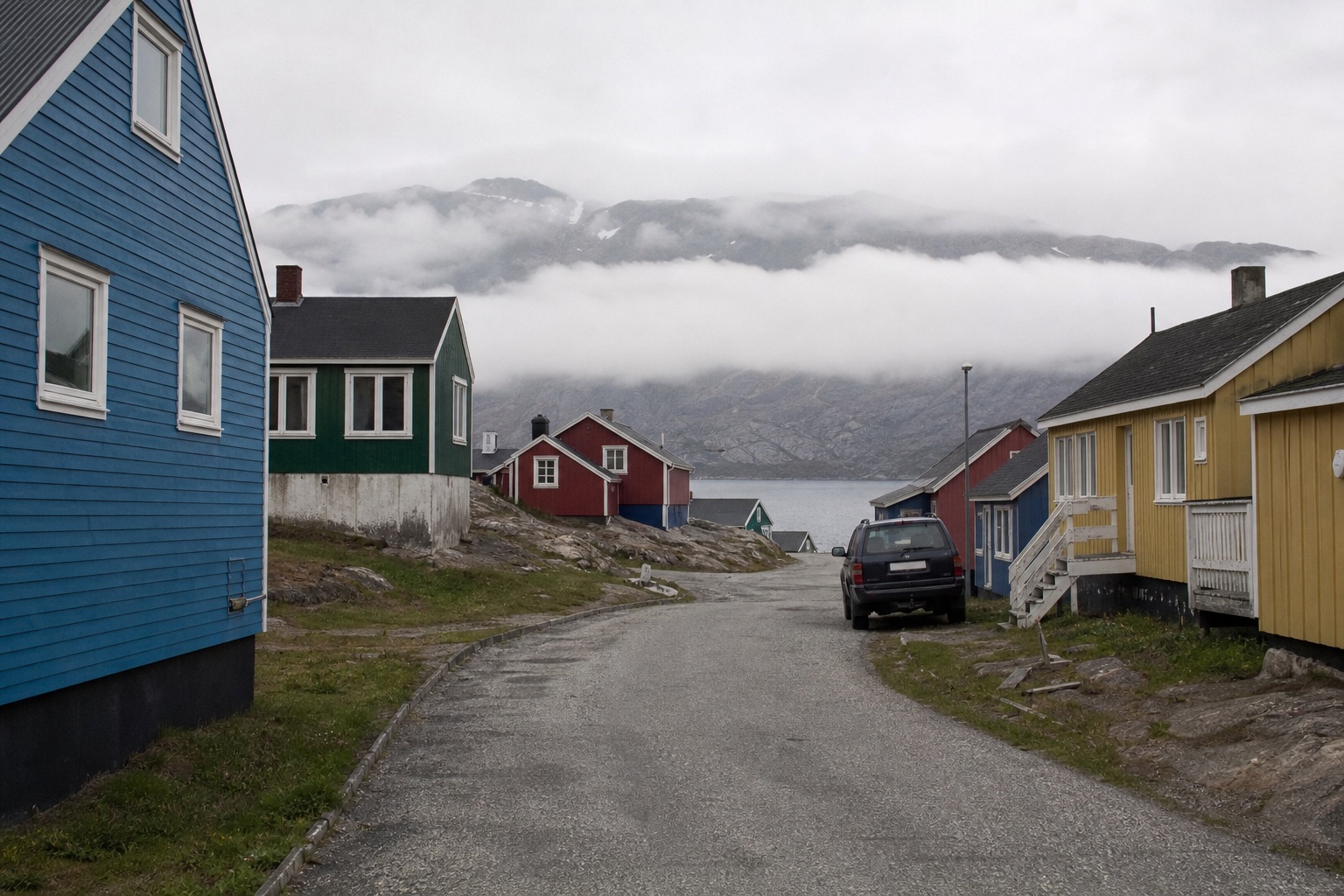
Greenland does not have a road network linking its towns. You can travel by road within the town you are visiting, but you cannot keep driving to the next town. Moving farther along the coast or into another part of the country requires a plane, helicopter or boat.
This changes how an itinerary needs to be organised. Two places that appear close together on a map may not have a simple connection on your dates. There is also no road journey to use as a practical fallback if a departure changes.
We recommend arranging transport between towns before committing to accommodation and activities. It is usually easier to fit the rest of the trip around the connections that are actually available than to force transport into a schedule that is already fixed.
This article begins once you are already in Greenland. The international journey is a separate planning task; here, the concern is how to move between Greenlandic destinations after arrival.
Plan the route before filling the calendar
For a trip with several stops, we begin with the destinations and the domestic connections between them. Activities come later. A route may look sensible geographically but still be awkward if the required transport does not fit the intended dates.
Write down each leg separately, including:
- Departure point
- Destination
- Date
- Mode of transport
- Time available before the next fixed commitment
This makes it easier to see where the itinerary depends on several departures working in sequence. It also shows where an extra overnight stay may be useful.
Once the basic route works, accommodation and activities can be placed around it. If a connection is only practical on a different date, changing the order of the destinations is often better than keeping a geographical sequence that creates tight or uncertain transfers.
It also helps to decide which stops are essential and which are optional. If the plan later needs to change, that priority makes it easier to adjust the itinerary without replacing more bookings than necessary.
Nuuk is the main domestic hub
Nuuk functions as Greenland’s main hub for domestic travel. Air Greenland flies from Nuuk to Aasiaat, Ilulissat, Kangerlussuaq, Kulusuk, Maniitsoq, Paamiut, Qaqortoq and Sisimiut. These connections are the practical starting point when planning a domestic journey from Nuuk.
Not every trip within Greenland has to pass through Nuuk. However, Nuuk will often appear as a departure point, arrival point or connection on an itinerary with several destinations. If you are already in another town, check the complete journey rather than looking only at the first leg.
A route involving several places may include more than one separate transport leg. Compare the number of legs as well as the overall journey time. A route with fewer separate departures is generally easier to manage than one that depends on several connections fitting together precisely.
Before booking accommodation in multiple towns, check how the whole route works on the relevant dates. The order of the trip should follow the connections that can actually be used, rather than the order that looks neatest on a map.
Domestic flights
Flying is central to travel between Greenlandic towns. From Nuuk, Air Greenland’s domestic network provides connections to Aasiaat, Ilulissat, Kangerlussuaq, Kulusuk, Maniitsoq, Paamiut, Qaqortoq and Sisimiut.
When comparing flight options, do not consider journey time in isolation. Look at how many separate legs are involved and what is scheduled after the planned arrival. A short itinerary on paper may still be fragile if an activity or another domestic departure follows immediately.
We also recommend checking the conditions attached to the specific ticket and reviewing the travel information close to departure. Domestic legs should not be assumed to work identically simply because they are part of the same holiday.
If a flight is one part of a longer itinerary, note which later accommodation and activities depend on it. That information is useful if a change to one leg has consequences elsewhere in the trip.
Helicopters are part of the transport system
Helicopters serve some connections that fixed-wing aircraft do not reach. They are not only used for excursions; on certain journeys, a helicopter is part of the ordinary transport system between places in Greenland.
We do not give a fixed list of helicopter routes because the relevant connection needs to be checked for the specific destination and date. The important point is that one leg may use a helicopter even when the rest of the itinerary uses fixed-wing aircraft.
Read the complete route carefully and confirm the mode of transport for every leg. Do not assume that each departure uses the same type of arrival or departure point, or that the practical process will be identical throughout the journey. If anything is unclear, resolve it before scheduling an important activity directly after arrival.
Boats between coastal communities
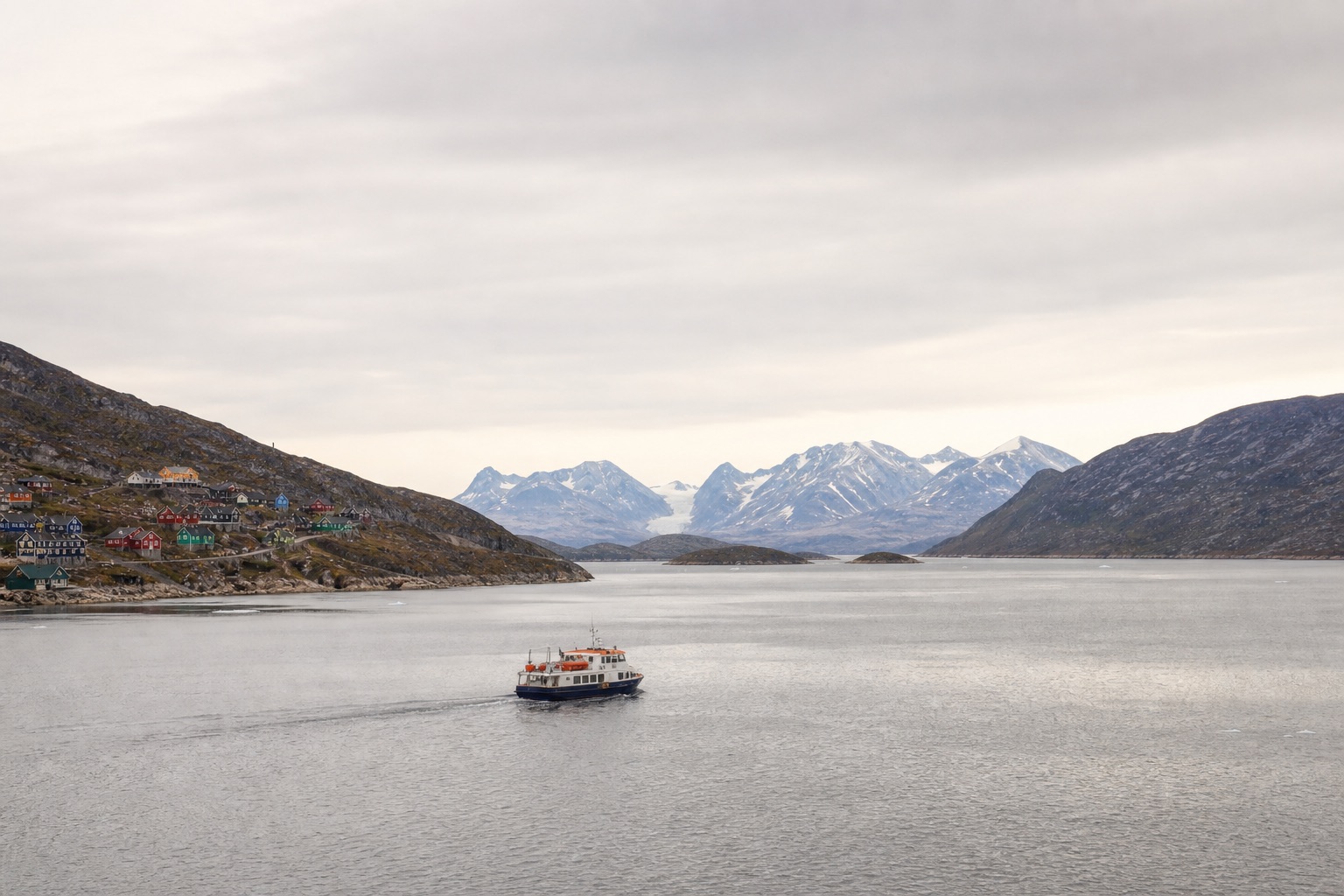
Boats also connect coastal settlements in various parts of Greenland. Depending on the journey, a boat may be the relevant connection between two places, an alternative to air travel or one part of a route that also includes planes or helicopters. The available option needs to be checked for the particular leg and travel date.
Treat a boat journey as a separate transport leg. Record its departure and expected arrival, then check how it fits with accommodation and onward travel. This is particularly important when the boat sits in the middle of a multi-stop itinerary.
Weather can affect boat travel just as it can affect flights and helicopters. A plan should not depend on a boat arriving just in time for an important activity or an onward departure. If the boat is necessary to reach the next destination, leave enough room for the sequence to change.
We also distinguish between transport and an excursion. A boat trip that returns to its starting town does not necessarily help you continue to another destination. When the purpose is domestic transport, confirm that the boat actually takes you to the place where you will stay next.
Allow time for Arctic weather
Greenland has an Arctic climate, and weather can affect any domestic leg, whether it is by plane, helicopter or boat. Extra time is therefore not just a precaution. It is part of a realistic itinerary.
One of the most avoidable planning problems is placing an important activity immediately after arrival in a town. If the arrival changes, there is no useful margin before the activity. The same applies when one domestic departure is scheduled tightly after the preceding transport leg.
As a general rule, we recommend not placing an activity that is central to the trip on the same day as arrival. An overnight stay between transport and the activity makes the plan more robust. On a longer itinerary, it may also be sensible to leave a day without an immovable commitment at the point where several transport legs meet.
Prioritise extra time before anything that cannot easily be moved. This could be a particular activity, an arrangement involving other travellers or the final domestic leg in the programme. The point is not that every departure will be affected. It is that there is no road connection available as a simple replacement when one is.
If weather changes the plan, first identify the affected transport leg and then review everything that follows. One change may affect later accommodation, activities and onward departures. Keep reservations and relevant contact details together so that affected arrangements can be handled in the right order.
How we organise a multi-stop itinerary
Our usual planning sequence is straightforward:
- List all the destinations under consideration.
- Identify the possible transport modes between each stop.
- Check whether the journey requires a connection through Nuuk or somewhere else.
- Count the separate transport legs.
- Add time before important activities and onward travel.
- Only then book the parts of the itinerary that are difficult to change.
A route with fewer stops naturally involves fewer transport legs. That is not an argument against travelling to several towns, but each additional destination requires both travel time and some margin. If the total trip is short, longer stays in fewer places may be easier to carry out than a series of brief visits.
The itinerary should not depend on every leg operating exactly as first planned. A workable route has enough space for an adjustment without causing the rest of the programme to fall apart.
Choose the mode of transport for each leg
Planes, helicopters and boats do not necessarily solve the same transport problem. The appropriate choice depends on your current location, the next destination and the connections available on the date concerned. It rarely helps to decide in advance that the entire trip must use one mode of transport.
Flights are central between destinations covered by the domestic air network. Helicopters cover some connections that fixed-wing planes do not reach. Boats link coastal communities in different parts of the country and may form a separate leg within a longer route.
Where more than one option is available, assess it in the context of the whole itinerary. Consider the arrival time, the next overnight stay and the margin before the following commitment. The most direct individual leg is not always the most practical option if it leaves the rest of the schedule too tight.
Local transport is a separate question
Transport within a town is different from transport between towns. Local roads can take you around the destination, but they do not connect it to the next part of the journey. A local drive cannot replace a missing flight, helicopter departure or boat connection.
When arranging accommodation or activities, also check how you will get from the local arrival point to the specific address. This is separate from planning the domestic leg, but it still matters, especially when the arrival and the next commitment are close together.
Check every leg before departure
Even when the entire trip has been arranged in advance, we recommend carrying out a short check before each domestic leg. This gives you a chance to identify a change before it affects the rest of the day.
Confirm:
- that the date and departure point match the itinerary
- whether the leg uses a plane, helicopter or boat
- how much time remains between arrival and the next commitment
- which accommodation and activities would be affected by a change
- that relevant reservations and contact details are collected in one place
The main rule is simple: do not expect a tight connection to be rescued by road transport. Greenland’s towns are linked by air and sea, and the itinerary needs to reflect that. A clear route, fewer unnecessary changes and additional time around the most important commitments make weather-related adjustments easier to manage.
Last reviewed July 31, 2026